Travel to Netherlands
Day 1 Bollène - Luxembourg - Theux (849 Km.)
After an early breakfast in the French town of Bollène, we drove to Luxembourg City.
(in 695 Km.) Luxembourg City: Luxembourg, though small in size, has a history that spans over a thousand years. Founded in 963, it began as a fortress built by Count Siegfried and later evolved into a strategic stronghold desired by many European powers. Over centuries, the city changed hands numerous times, being ruled by the Spanish, French, Austrians, and Prussians. This turbulent past left a remarkable architectural and cultural legacy, turning Luxembourg into a mosaic of European influences. The city is now the capital of the Grand Duchy of Luxembourg and one of the de facto capitals of the European Union. As we arrived, we couldn’t wait to explore its historical layers and scenic landscapes. What better way to start than on two wheels?

Luxembourg -Place Guillaume II
Our exploration of Luxembourg began with a bike tour through the upper part of the city. We started at Place Guillaume II, a grand square flanked by the City Hall and the equestrian statue of Grand Duke William II. Just a short ride away was the bustling Place d'Armes, where locals and visitors gather at cafés under the trees. From there, we pedaled to the magnificent Grand Ducal Palace, the official residence of the Grand Duke, with its Renaissance façade and discreet royal guards. A few turns away stood the Notre-Dame Cathedral, a stunning example of late Gothic architecture. We paused to admire its stained glass and peaceful interior before continuing on.

Luxembourg - Grand Ducal Palace
Not far from the cathedral, we reached Place de la Constitution, built atop the old Beck Bastion. Here, the Gëlle Fra monument stood tall, honoring the Luxembourgish soldiers who died in the world wars. Behind it, the Pétrusse Valley opened up in a breathtaking view, framed by the elegant Adolphe Bridge. We crossed it and rolled into Place de Metz, where neoclassical buildings stood in quiet dignity. These high points of the city gave us a sense of both its strategic importance and its aesthetic harmony. The calm elegance of the architecture made it easy to forget we were in a capital city.
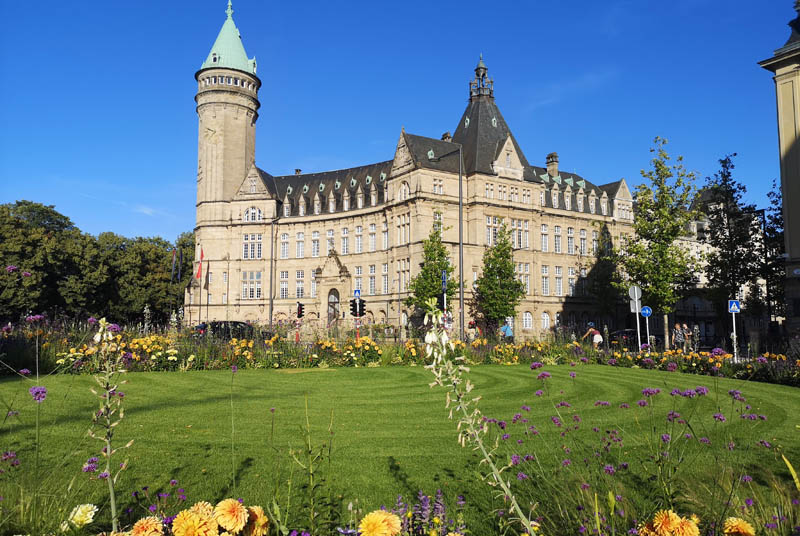
Luxembourg - Place de Metz
Leaving the upper town behind, we coasted down toward the lower city, beginning with a peaceful ride through the Pétrusse Park. We passed under leafy canopies and old stone bridges before arriving at the small and charming Saint Quirin Chapel, nestled into the cliffside. The air was cooler and quieter here, as though we had stepped into a different world. The path led us naturally into the Grund district, a quaint quarter lying right on the banks of the Alzette River. The tranquility of the water, coupled with the ancient buildings, made this one of the most picturesque parts of the city.
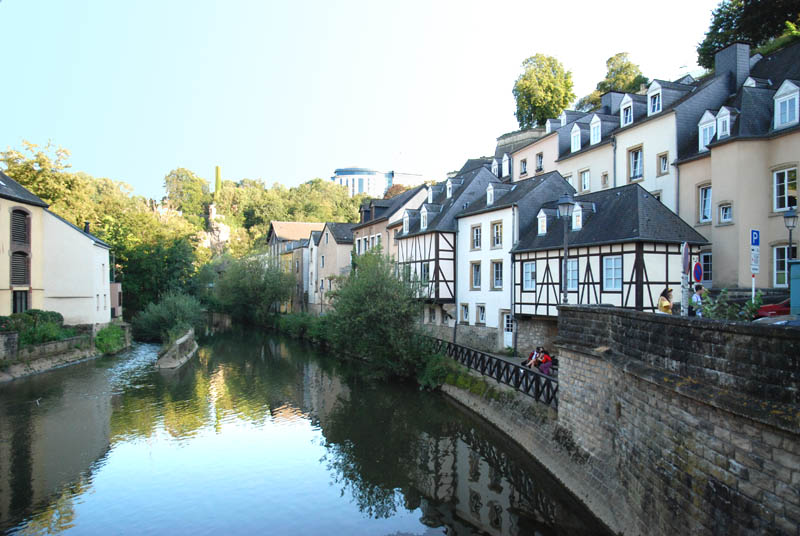
Luxembourg - Alzette river
In Grund, we wandered slowly through its narrow streets, pausing often to take in the views. Rue Münster quickly became one of our favorite spots—it’s one of the most photographed streets in Luxembourg, and we could see why. The reflections in the river, the colorful façades, and the sheer cliff walls above made for a postcard-perfect scene. We passed by the impressive Neimënster Abbey, now a cultural center and museum. The nearby Odendahl Park added a touch of green serenity. The whole area had a special charm that made us want to linger and soak in its quiet magic.
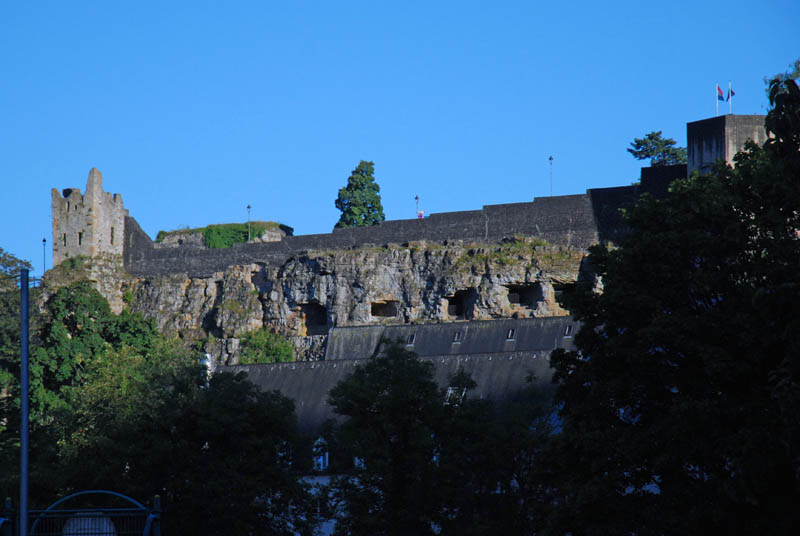
Luxembourg - Walls
To return to the upper city, we took the Pfaffenthal elevator, a sleek and modern glass structure that lifted us effortlessly back to the heights. As we rose, the panoramic views unfolded below us—the Alzette, the valley, and the clustered rooftops of Grund. Once at the top, we followed the Chemin de la Corniche, famously called “the most beautiful balcony in Europe.” This pedestrian walkway, built along the old city walls, offered stunning views of the lower city and the river winding through it. The mix of medieval architecture and natural beauty took our breath away.

Luxembourg - Grund from el Chemin de la Corniche
There were still many places we couldn’t fit into our itinerary, leaving us with great reasons to return to Luxembourg. One of them is the famous Pétrusse Casemates, the underground tunnels carved into the rock, offering a glimpse into the city’s military past. We also missed exploring the Kirchberg district, known as the European Quarter, home to several EU institutions, modern architecture, and impressive museums like Mudam. Another spot high on our list is Fort Thüngen, part of the city's old fortress system, often referred to as the “Three Acorns” due to its iconic towers. With so many historical, cultural, and scenic sights left to discover, we know our first visit won’t be our last.
(a 154 Km.) Theux: We rested in this Belgian town located near Liège, already at the gates of Holland.