Travel to Budapest
Day 1 Chain bridge, Buda
Budapest: The first thing we do when we land is to buy a transportation voucher for three days. After leaving our bags at our hotel, we make use of the historic Budapest metro. Its first metro line, declared a World Heritage Site in 2002, was conceived as a conveyance of passengers from the city center to the Municipal Park without the need for surface transportation on Andrássy Avenue. It is the second oldest underground line in the world (1896) and the first underground electric line on the European continent.
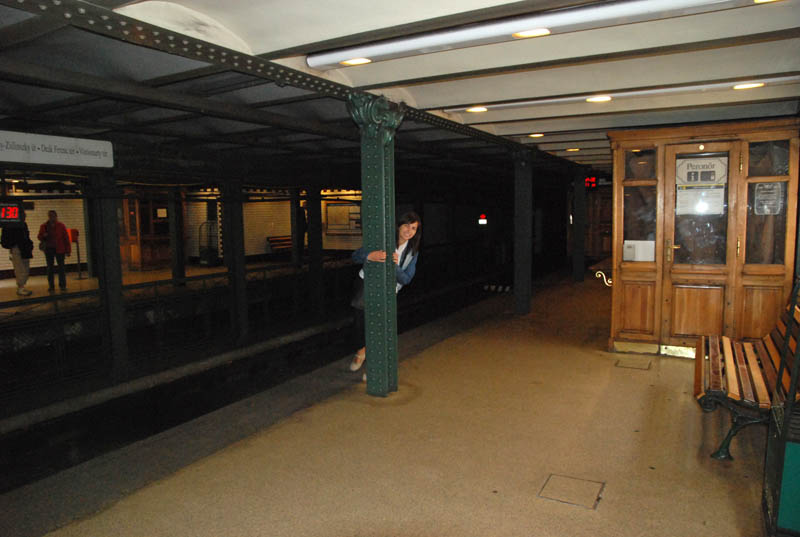
Budapest - Metro
From the Vörösmarty tér station we head towards the Chain Bridge. Before reaching it we passed in front of the statues of the little princess and the girl and the dog, located between the Danube and the Vigadó tér park. The Chain Bridge (Széchenyi lánchíd) is the oldest of the bridges linking the two cities of Buda and Pest and symbol of the city. Opened on November 20, 1849, it is a suspension bridge, in which the main cables have been replaced by rigid links of a chain. Its central span is 202 meters, one of the longest in the world when it was inaugurated.

Budapest - Chain bridge
After crossing the bridge we arrive at the Clark Ádám tér square, to the left of which we find the Buda Castle funicular (Budavári sikló), which will take us to the top of the hill. The funicular was built in 1870, although after its destruction during World War II it was not reopened until 1983. The funicular, with a slope of 31.75 °, saves a vertical drop of 51 meters, at a speed of 1.5 meters per second. When we arrive at the upper station we have a viewpoint with spectacular views and the Turul statue, which according to Hungarian legends is a huge hawk or eagle.
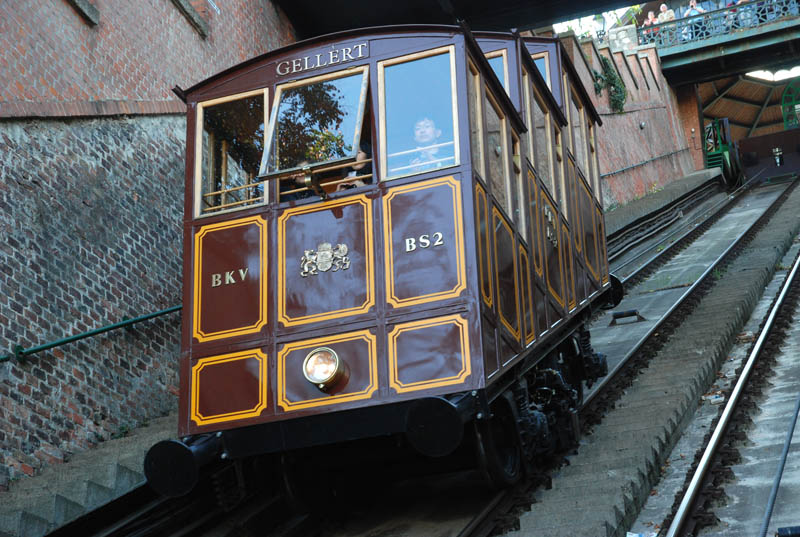
Budapest - Funicular
Buda was the capital of Hungary from 1361 until it was captured by the Ottoman Empire in 1541. Buda was declared a free city in 1703, and became the capital of Hungary in 1784. Buda was united with the cities Óbuda and Pest in 1873 to form Budapest. When we get to the top of the hill we see that the part corresponding to the Buda Castle is closed due to a musical festival, so we dedicate the day to visit the part corresponding to the stately streets, the Matthias Church or the Bastion of the Fishermen among others.
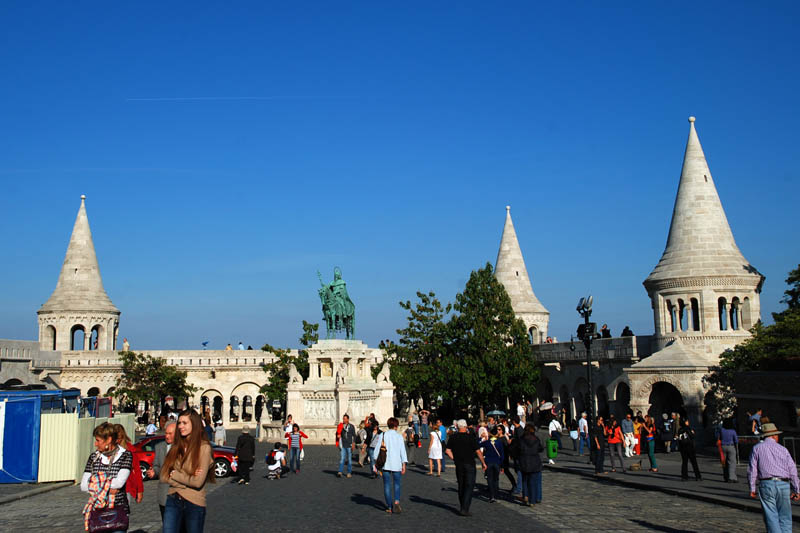
Budapest - Fisherman´s Bastion
One of the most popular places of Buda Castle is the Fisherman's Bastion, built between 1895 and 1902, it is a set of white stone neo-Gothic and Neo-Romanesque, terraces, stairs and walks, adorned by seven towers that represent to the seven founding Magyar tribes of Hungary. It owes its name to the guild of fishermen who in the Middle Ages were in charge of defending this part of the wall. In one of its galleries we saw a romantic restaurant where they played live music with violin.
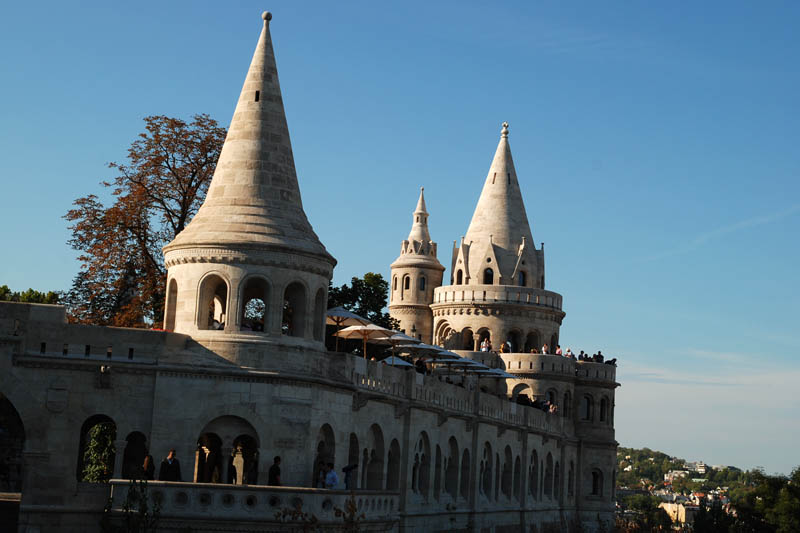
Budapest - Fisherman´s Bastion
Another attraction of the Fishermen's Bastion are the views it offers over the Danube and the city of Pest. Unbeatable place to see Margaret Island, Parliament, especially when the last rays of the Sun illuminate its walls, or the Chain Bridge. It is also interesting to see at dusk the lights of the city, among which highlights the dome of the St. Stephen's Basilica.