Travel to Ireland
Day 12 Cashel, Kilkenny (140 Km.)
(in 17 Km.) Rock of Cashel: Also known as St. Patrick´s Rock, is a historic site located in Tipperary County. It served as a traditional settlement of the kings of Munster since the fifth century, hundreds of years before the Norman invasion, although only a few structures of the first times remain. Most of the current buildings date from the twelfth and thirteenth century. In 1101 the kings ceded the fortress to the church, becoming an important ecclesiastical center until it was partially destroyed by Cromwell´s troops in 1647. In the 18th century the abbey was finally abandoned.
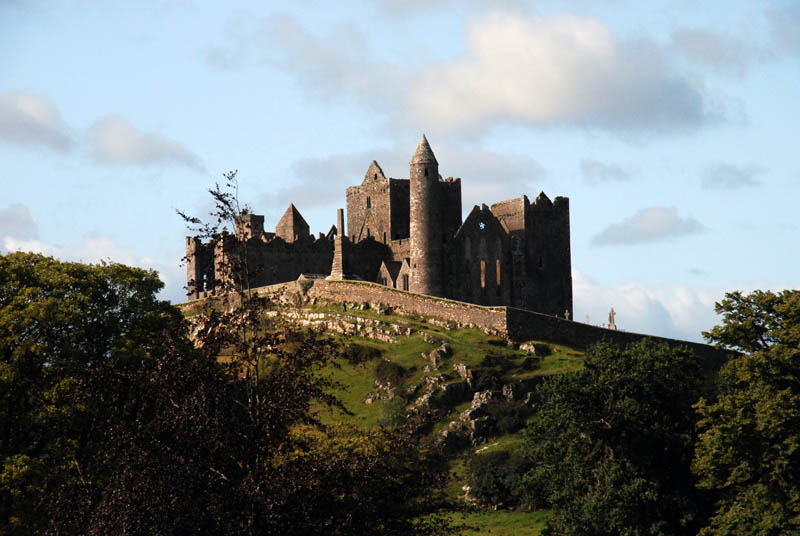
Rock of Cashel
The Circular Tower, dating from around 1100, is the oldest and tallest building in the complex (28 meters high). The Cathedral, built between 1235 and 1270, is a cruciform building with a central tower and ending west in a palace. In the north nave you can find three 16th-century tombs carved with bas-reliefs of great artistic quality. The chapel of King Cormac consecrated in 1134 is the most important building. Started in 1127, it is a very sophisticated structure unlike most of the Irish Romanesque churches that were simple and with few isolated ornaments. It also contains one of the best preserved Irish frescoes of this period.
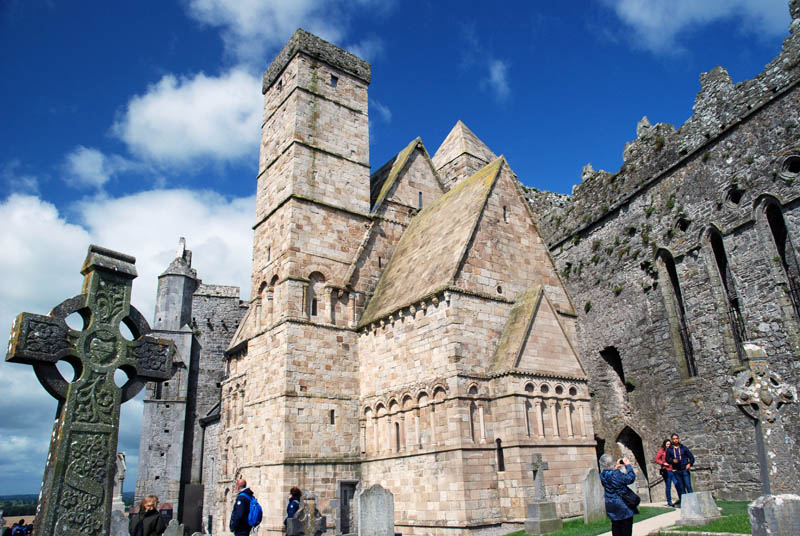
Cormac´s chapel
In the complex there are two Crosses of St. Patrick, a copy located in its original location and the authentic from the 12th century preserved in the museum located in the crypt below the Vicars choir. It is a fragment of a Latin Cross on whose face this one can see Saint Patrick who was in this place in the year 450. On the opposite side you can see a scene of the crucifixion of Christ.
(in 59 Km.) Kilkenny: Located on the banks of the Nore River, the city is known for its medieval buildings and nightlife. During our visit we see a multitude of yellow and black flags to support the county team that the next day played the 2019 All-Ireland Senior Hurling Championship Final.
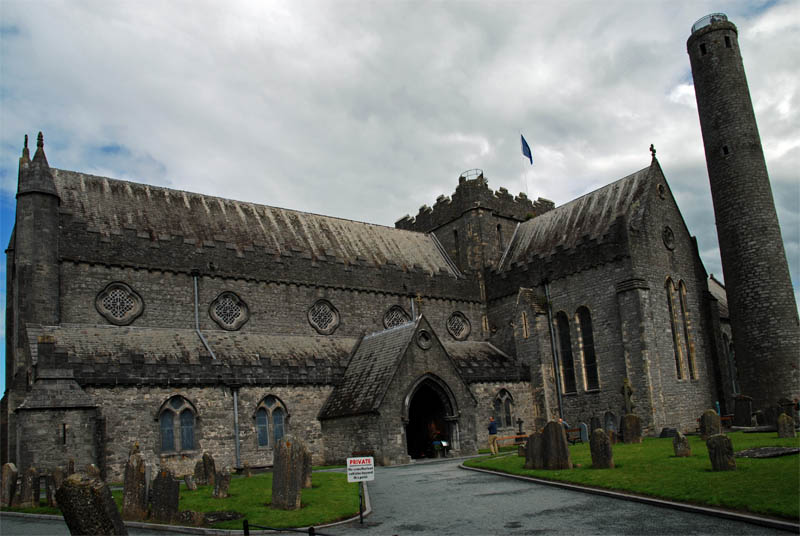
Kilkenny - Cathedral of St Canice
St Canice´s Cathedral, also known as Kilkenny Cathedral, present building dates from the 13th century and is the second longest cathedral in Ireland. The Cathedral is named after Saint Canice, who also gave his name to the town. Cruciform, the cathedral was built in the Early English, or English Gothic, style of architecture, of limestone, with a low central tower supported on black marble columns. The exterior walls, apart from the gables, are embattled, and there are two small spires at the west end. The cathedral is seventy-five yards long, and its width along the transepts is forty-one yards. Beside the cathedral stands a 100 ft 9th century round tower.
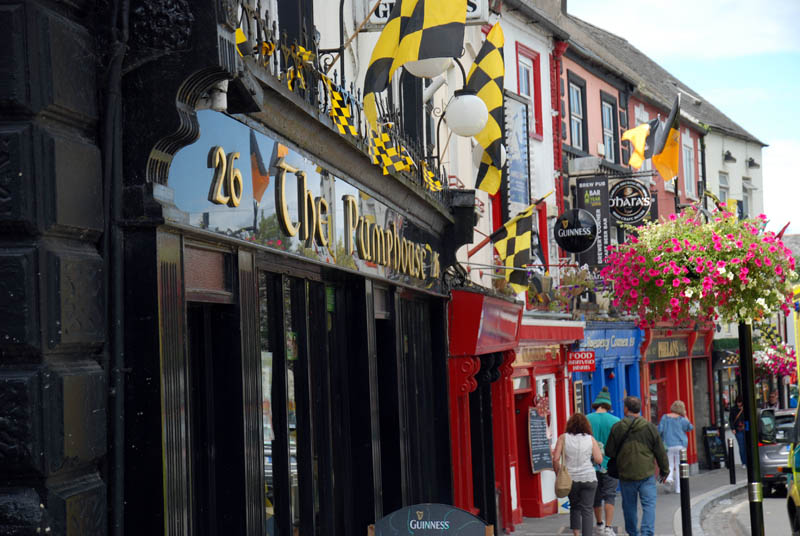
Kilkenny - Pubs at Parliament street
We move to Parliament street, where we eat in a pub and taste my favorite beer, Kilkenny. In this street we find the building of the Smithwick’s, one of the oldest beers in Ireland, where you can take a tour to visit the facilities and taste their beers. A few meters away we found the Rothe House and Gardens, a late 16th-century merchant's townhouse complex built by John Rothe Fitz-Piers between 1594–1610 and is made up of three houses, three enclosed courtyards, and a large reconstructed garden with orchard. The Tholsel on High Street was built in 1761 by Alderman William Colles as place for collecting tolls, but has also been used as a customs house, a courthouse and a guildhall. It is used today as the city hall, and this is the name by which many local people know the building.
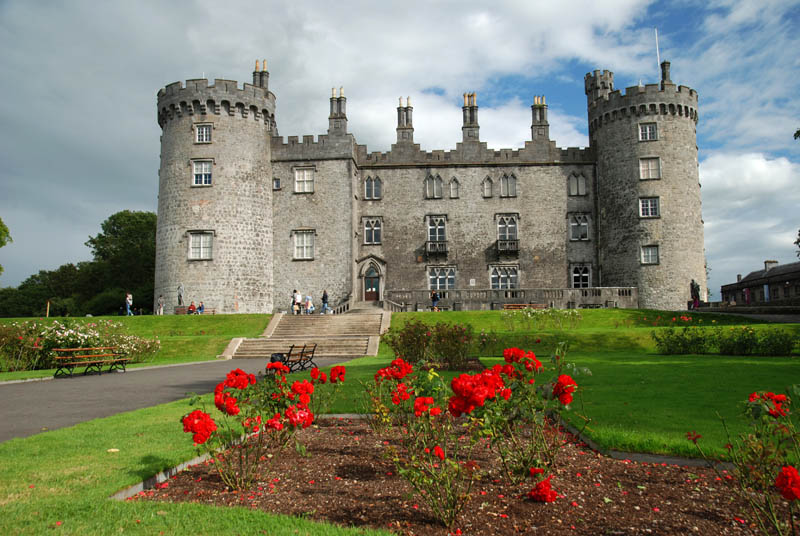
Kilkenny castle
After passing through the alley of Butter Slip we will see Kilkenny Castle. The foundation of the castle dates back to the year 1190 belonging to the Butler family from the fourteenth century until 1920. The main rooms are the library, the dining room, the Chinese room and the Long Gallery. Part of the National Art Gallery is in place. On the side that faces the city there are ornamental gardens. Next to the castle are the old garages and stables, now converted into shops and restaurants, in addition to hosting the National Design & Craft Gallery. We end our visit to the city visiting the St Mary´s Cathedral (1794-1857) and the Black Abbey, established in 1225, which name derives from the use of the term "Black Friars" to describe members of the Dominican Order.
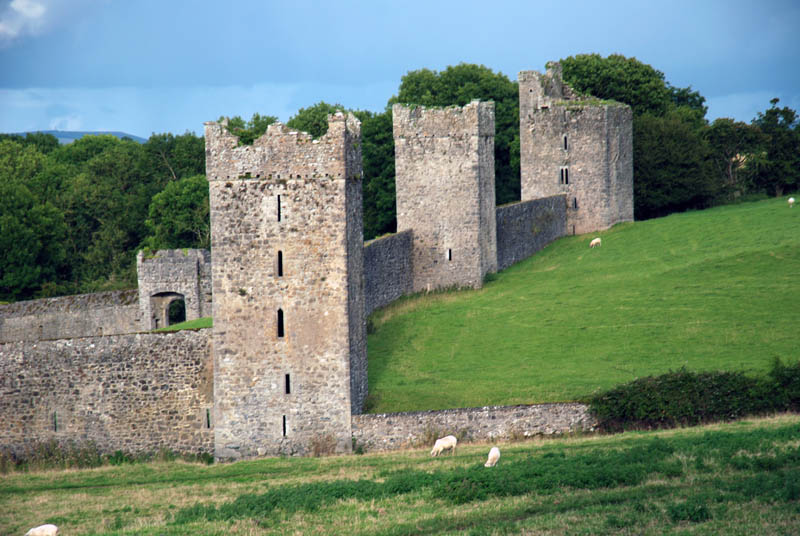
Kells priory
(in 18 Km.) Kells priory: The priory is a National Monument. One of its most striking feature is a collection of medieval tower houses spaced at intervals along and within walls which enclose a site of just over 3 acres. These give the priory the appearance more of a fortress than of a place of worship and from them comes its local name of "Seven Castles". The priory is divided into two parts, an inner monastic Precinct alongside the river and a large outer enclosure to the south. Today all the monastic remains are grouped together in the Precinct while Burgess Court is little more than a walled field populated by tourists and sheep.
(in 46 Km.) Thurles: We overnight again in this town near Cashel.