Travel to Jordan
Day 6 Wadi Musa - Petra - Wadi Rum (109 Km.)
Petra: Petra's Siq (al-Sīq) is the spectacular main entrance to the Nabataean city, a narrow gorge approximately 1.2 km long, flanked by rock walls up to 80 m high. This gorge, formed by water erosion and tectonic movement, impresses with its reddish hues and shapes carved into the sandstone. Along the way, visitors will find remnants of the ancient Nabataean hydraulic system: canals carved into the rock that carried water from distant springs to the city. Also of note are the "djin blocks", sculpted blocks that were probably used for ritual or funerary purposes. The tour is filled with small historical and artistic details, such as carvings of caravans and human figures, reminders of Petra's role as a vital trading crossroads in antiquity.
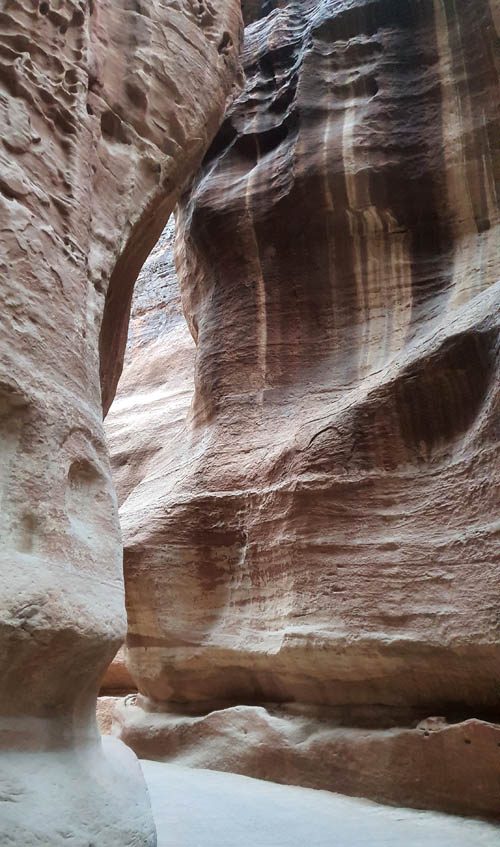
Petra - Siq (al-Sīq)
The walk along the Siq is an immersive experience, full of small details and surprises, such as carvings in the rock depicting camel caravans and human figures, suggesting the commercial importance of Petra in antiquity. Near the end of the gorge, a weathered relief can be seen showing a Nabataean trader accompanied by his camel, symbolising the trade in incense and spices. The most striking moment comes when suddenly, after a final bend in the narrow path, the impressive façade of the Treasury (Al-Khazneh) is revealed, gleaming in the sunlight. This iconic sight is one of the most photographed in the world, making the Siq not only a passage to Petra, but an unforgettable experience in itself. The Siq also has a cinematic touch: its final stretch served as an iconic backdrop in the film Indiana Jones and the Last Crusade (1989).
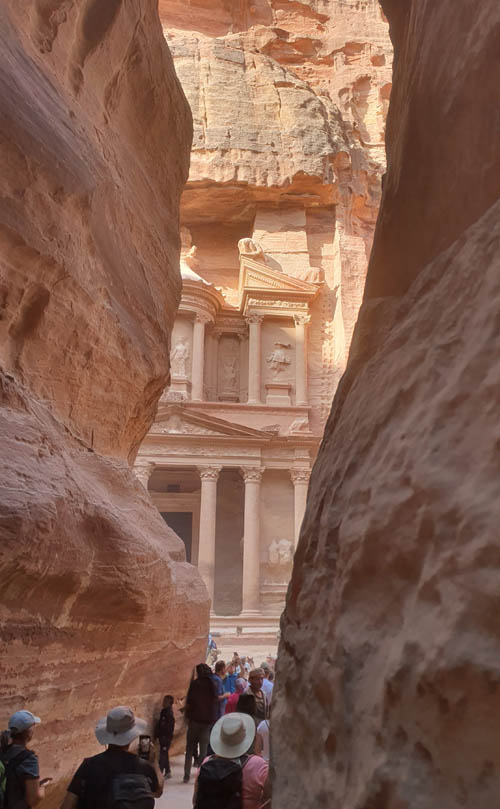
Petra - The Siq on arrival at the Treasury
The viewpoints at the Treasury of Petra offer some of the most spectacular views of this iconic monument. Access to these viewpoints requires walking and ascending rocky paths, but the rewards are worth every step. One of the most popular viewpoints is the one located on the right side of the Treasury, which is accessed by climbing the Al-Khubtha path. The walk takes between 40 minutes and an hour, but from the top, some 100 metres above the level of the Treasury, you get a privileged view of the entire façade of the Treasury, surrounded by the towering walls of the Siq. We climbed to another well-known viewpoint on the top of a hill to the left of the Treasury, reached with the help of Bedouin guides. From here, the perspective is different but just as fascinating, ideal for those looking to photograph this ancient treasure from less conventional angles. It rises some 60 metres above the Treasury, providing a closer, sideways view of the monument. At this vantage point we found a Bedouin tent where they made us a cup of hot tea. We stayed for a while enjoying the view, resting and drinking our tea.
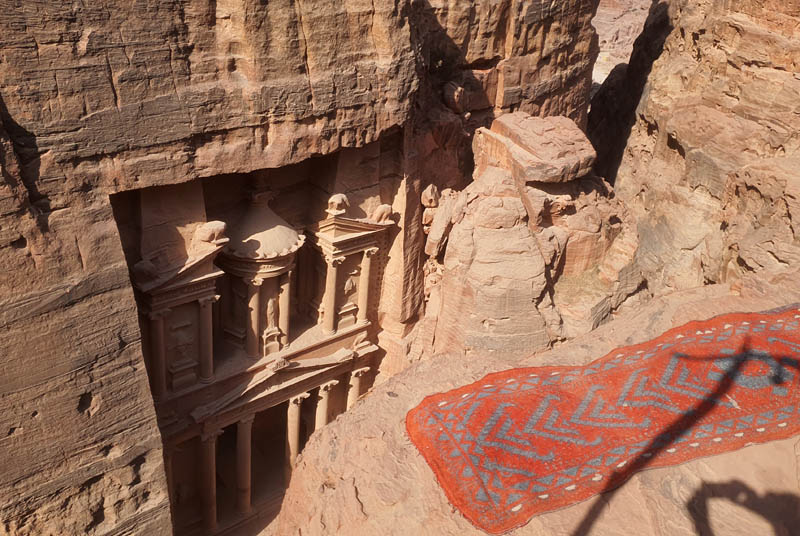
Petra - Viewpoint
Our next visit is the High Place of Sacrifice, one of the oldest and most impressive viewpoints in Petra, located on top of a mountain. To get there, you have to climb a steep path with stairs carved into the rock, which takes approximately 30-45 minutes depending on your pace, although for us it was less as the distance from the viewpoint is shorter. Along the way, you can admire spectacular views of the canyon and some Nabataean obelisks carved into the stone, possibly funerary markers. Once at the top, you enter a large ceremonial platform that was used for rituals and sacrifices in honour of their deities, with an altar carved directly into the rock. From there, the panoramic views of the valley and surrounding mountains are breathtaking, providing a spiritual and visual experience that reflects the deep connection of the Nabataeans to their natural environment.
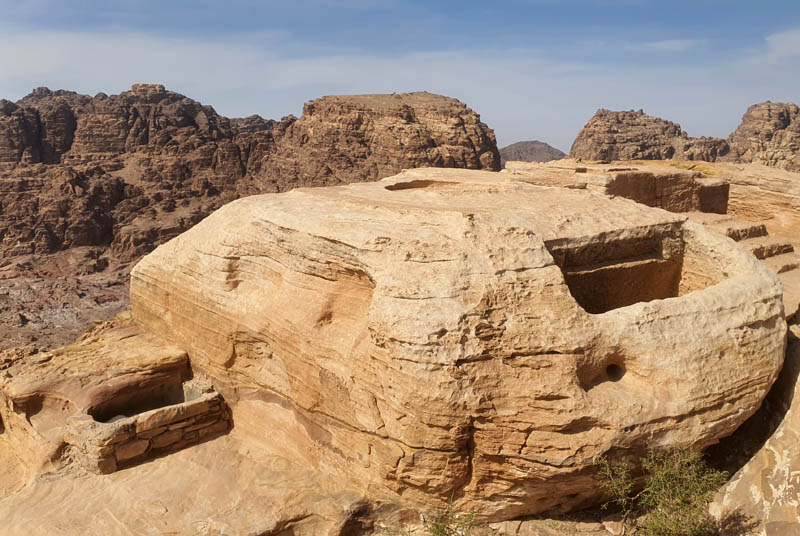
Petra - High Place of Sacrifice
From the High Place of Sacrifice, the descent into the Wadi Farasa canyon offers a fascinating route, less crowded but full of hidden treasures. The trail begins by descending stairs carved into the rock, surrounded by impressive reddish walls. Further on, the landscape opens up slightly, revealing the Lion Relief, an ancient relief carved in the shape of a lion, which probably had a ritual significance linked to water. As you proceed further, you come to the Garden Tomb, so called because of the small courtyard with traces of an ancient garden, and the Tomb of the Roman Soldier, a monumental building with a façade decorated with Nabataean reliefs and capitals, which may have housed the remains of a high-ranking officer. Next to this tomb is the Roman Soldier's Triclinium, a space where ritual banquets were held.
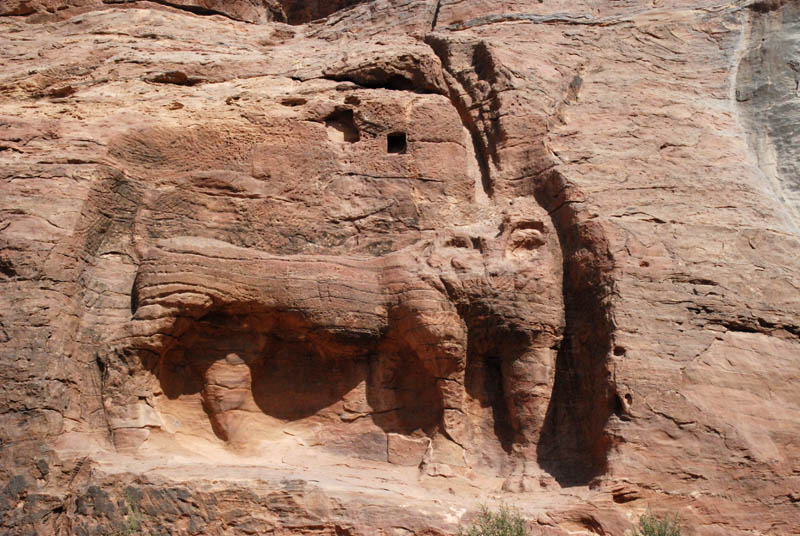
Petra - Lion Relief
Shortly after, the Coloured Triclinium appears, whose inner walls exhibit natural sandstone veins in shades of reddish, purple and gold, creating a unique atmosphere that invites you to stop and admire its natural beauty. Continuing along the winding canyon, the trail passes several cisterns carved into the rock, used to store water. Along the route, the rock formations and the colours of the canyon change constantly, creating a magical and serene atmosphere. Following the path, you will come to two fascinating monuments: the Renaissance Tomb, whose name derives from the resemblance of its façade to elements of Renaissance architecture, and the Broken Pediment Tomb, which owes its name to the break in its upper pediment, giving it a peculiar appearance. These monuments stand out for their imposing presence in the middle of the canyon, showing the architectural prowess of the Nabataeans.
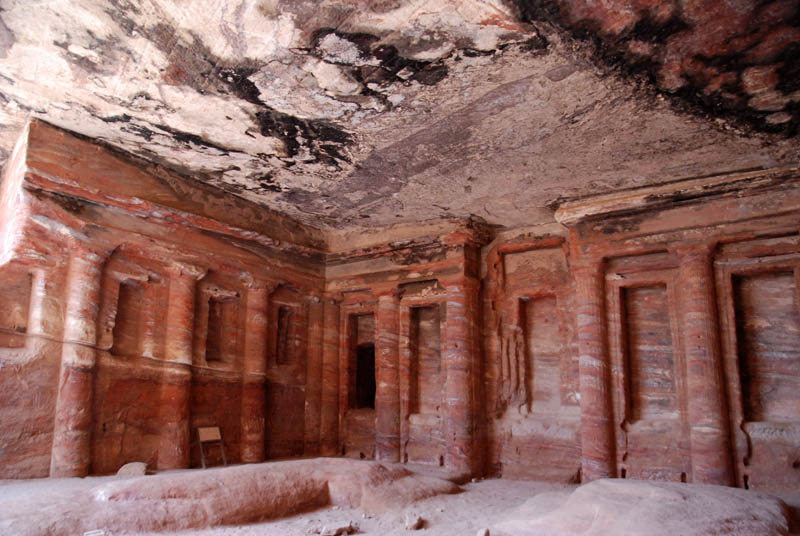
Petra - Colored Triclinium
Finally, the path connects with the Street of Columns, allowing the visitor to continue exploring Petra's main temples and monuments after an enriching experience along this hidden path in Wadi Farasa. Our visit to Petra ends here, although we still have to walk to the exit, passing again the Street of Facades, the theatre, the Treasury and the Siq.
(109 km. away) Wadi Rum: Our arrival in Wadi Rum started very badly. We had booked luxury tents at W CAMP Wadi Rum (no longer in existence, as they keep changing their name). The thing is that they sell you accommodation, but the transfer from the village to their tents in the desert is not included (unless you hire a jeep tour with them) and they demand 15 euros per person per trip. As there were six of us, that meant an additional 180 euros. A real rip-off. The tents, although a bit dirty, were fine. We booked the traditional Bedouin dinner, which, although expensive and a bit meagre, was quite good. After dinner we went on a short one-hour excursion into the desert to see the stars.