Travel to Tuscany
Day 5 Lucca - Florencia - Lucca (156 Km.)
(in 78 Km.) Florence: We start our tour of the city at Piazzale Michelangelo, situated on a hill in the South of the city. It offers stunning views of the city and the surrounding Tuscan hills. The square is named after the famous Renaissance artist Michelangelo, who was born in Florence. The Piazzale attracts visitors to admire the panoramic views of the city. At the center of the square, there is a bronze replica of Michelangelo's David statue, which serves as a symbol of the city's artistic heritage. The statue was created in the 19th century and is one of many copies of the original, which can be found in the Accademia Gallery in Florence. The square is surrounded by a beautiful garden and is a peaceful oasis in the bustling city of Florence.
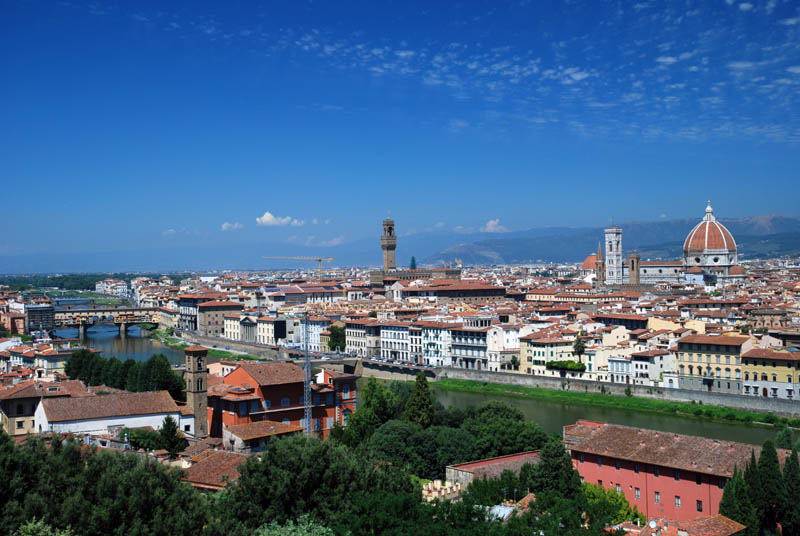
Florence - Piazzale Michelangelo
We descend towards the city center, passing in front of the Pitti Palace. It is a grand Renaissance palace built in the 15th century for a Florentine banker. It has served as a residence for several important families, including the Medici and the Habsburg-Lorraine. The palace is famous for its impressive size and architectural style, which includes elements of Renaissance and Baroque design. It houses several museums and art collections, such as the Palatine Gallery and the Gallery of Modern Art, displaying works by famous artists like Raphael, Titian, Caravaggio, Canaletto, Modigliani, and De Chirico. The Boboli Gardens, which surround the palace, are considered some of the most beautiful in the world, featuring a variety of plants and flowers, fountains, and sculptures. Overall, the Palazzo Pitti is a must-visit destination for anyone interested in art, history, or architecture.
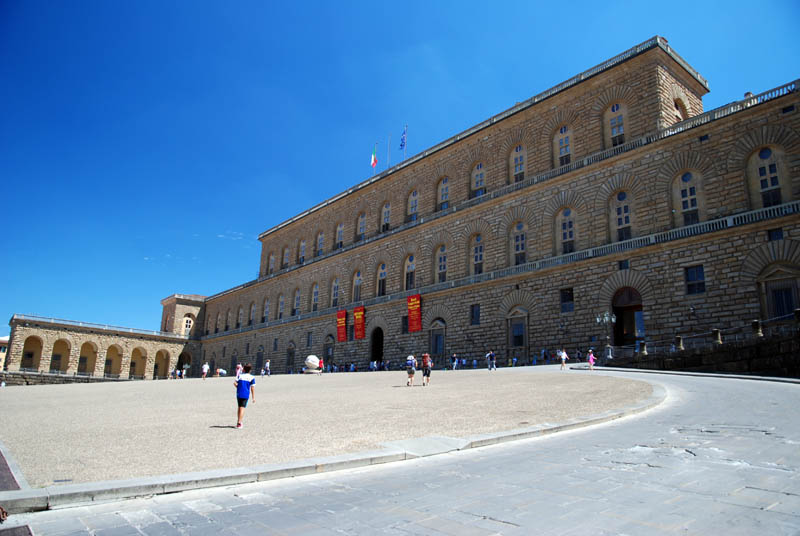
Florence - Palazzo Pitti
Ponte Vecchio is a medieval bridge. It spans the Arno River and is one of the most famous landmarks in the city. The bridge is renowned for the number of jewelry and gold merchants who have had shops on the bridge since the 14th century. During World War II, Ponte Vecchio was one of the few bridges in Florence that was not destroyed by the retreating German army, and as a result, it remains one of the city's most iconic structures. The bridge is a unique architectural feat, featuring a series of three segmental arches that cross the river. The shops that line the bridge are housed in colorful buildings with sloping roofs and overhanging balconies. The bridge also has several passages and small squares, making it a popular gathering place for both locals and tourists.

Florence - Ponte Vecchio
In addition to its historical and architectural significance, Ponte Vecchio is also renowned for its stunning views of the Arno River and the surrounding city. From the bridge, one can take in panoramic views of the nearby hills, the famous Uffizi Gallery, and other notable buildings in the city. Ponte Vecchio offers a glimpse into the city's rich history and cultural heritage. The "Ponte Vecchio locks" is a tradition that has become popular among visitors to the famous bridge. According to the tradition, couples visiting the bridge place a lock on the bridge as a symbol of their love and commitment to each other. The idea behind the tradition is that by attaching a lock to the bridge, the couple is sealing their love and ensuring that it will last forever.
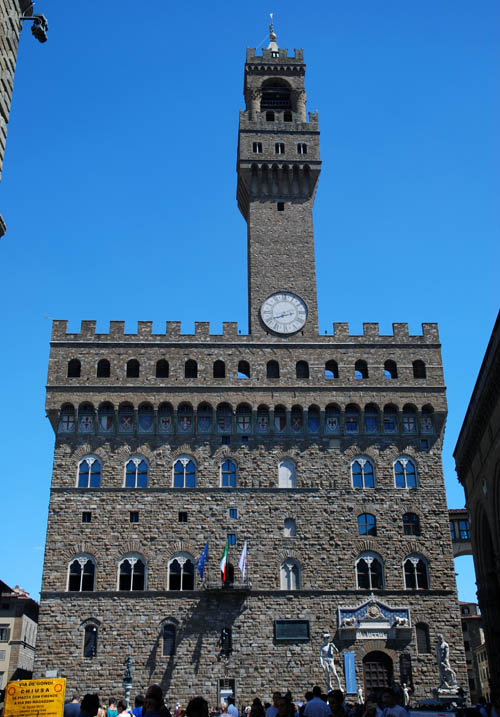
Florence - Palazzo Vecchio
Palazzo Vecchio was originally built in the 13th century and served as the town hall for the Republic of Florence. It is known for its impressive Gothic design, with its tall tower, crenellated battlements, and elaborate arched windows. The palace's massive entrance is surrounded by allegorical statues and is considered one of the finest examples of Renaissance sculpture. The interior of Palazzo Vecchio is equally magnificent, with its high-ceilinged halls, frescoed walls, and intricate marble floors. The palace is also famous for its art collections, which include works by some of the greatest artists of the Renaissance. Visitors can tour the palace's art collections and private apartments of the ruling Medici family. The Uffizi Gallery is also located next to the palace.
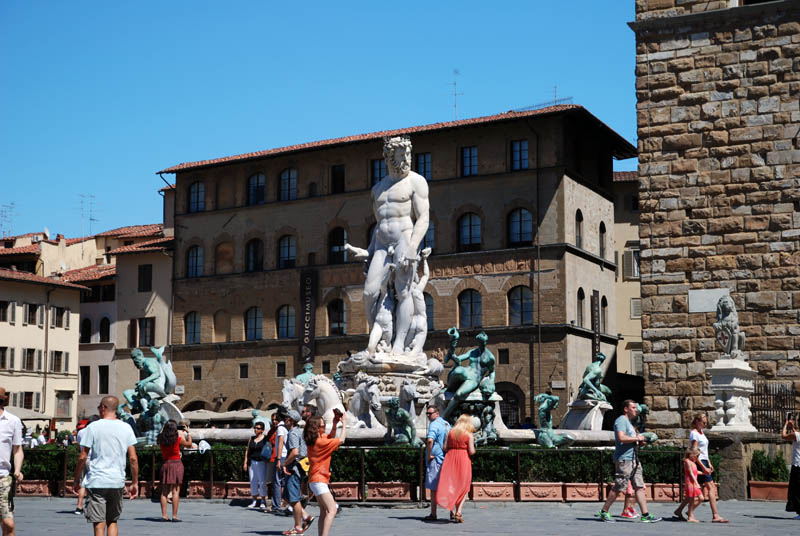
Florence - Piazza della Signoria
Piazza della Signoria is a famous public square where is located the Palazzo Vecchio. It is known for its historical significance, architectural landmarks, and art collections. The square has been a hub of political and cultural activity in Florence since the Middle Ages, and is home to several notable structures, including the Palazzo Vecchio, the Loggia dei Lanzi (a public gallery), and the Fountain of Neptune. The Piazza della Signoria is also famous for the many important sculptures that line its streets, including the replica of Michelangelo's David, the statue of Hercules and Cacus, by Bandinelli, the equestrian statue of Cosimo I, by Giambologna, representing the military power of the family and the famous bronze sculpture of Perseus by Benvenuto Cellini.
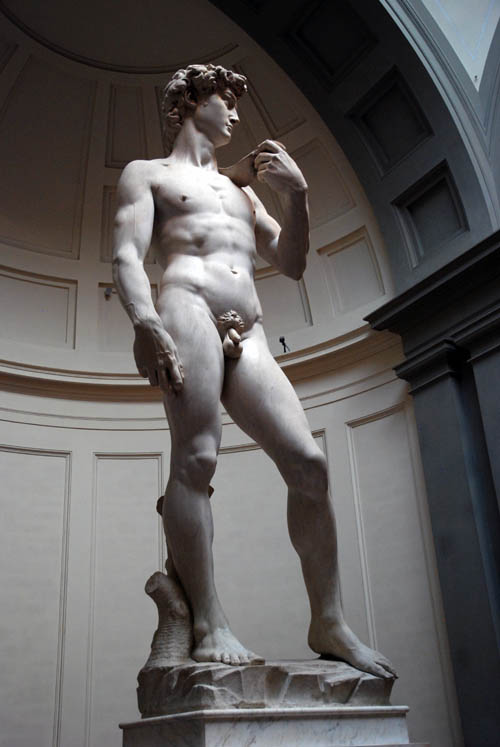
Florence - Galleria dell´Accademia
After queuing for a long time, we went inside to visit the Galleria dell'Accademia, that features a collection of important works by Renaissance artists. One of its most famous pieces is Michelangelo's David, a 17-foot-tall marble statue of the Biblical hero David. Created between 1501 and 1504, David was originally installed in the Piazza della Signoria, but was in 1873 moved to the Accademia for preservation. The sculpture is widely regarded as a masterpiece of Renaissance art, and is notable for its depiction of the ideal human form. Visitors to the Accademia can also see other Michelangelo sculptures, as well as works by other notable Renaissance, mostly from the period 1300–1600, such as Sandro Botticelli and Andrea del Sarto, and a large collection of religious paintings.
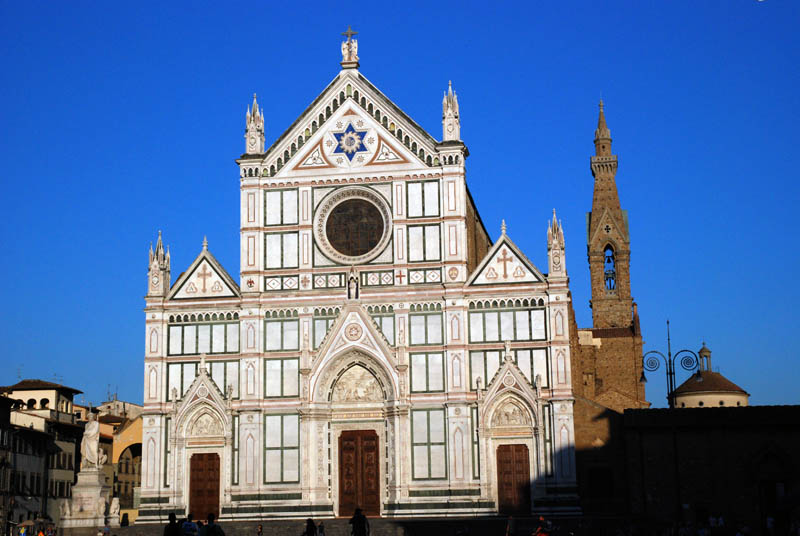
Florence - Basilica de la Santa Croce
With the last rays of the sun shining on its façade, we went to the Basilica di Santa Croce, situated on the Piazza di Santa Croce. It is one of the largest Franciscan churches in the world and is considered to be one of the most important examples of Italian Gothic architecture. The basilica is home to the tombs of many famous Italians, including Michelangelo, Galileo, and Machiavelli, making it a popular destination for tourists and art lovers. The interior of the church is decorated with frescoes and sculptures by important artists such as Giotto and Donatello. In addition to its artistic and cultural significance, Basilica di Santa Croce is also an active place of worship and hosts regular masses and religious events.
(in 78 Km.) Lucca: We return to our accommodation.