Travel to Tuscany
Day 6 Lucca - Volterra - San Gimignano - Siena (146 Km.)
(in 73 Km.) Volterra: This walled city is situated on a hilltop and surrounded by the beautiful countryside of Tuscany. Volterra has a long and rich history dating back to the Etruscan civilization, and it was an important center during the Roman era. Later, it became a thriving medieval city and was ruled by various powerful families, including the Florentine Medici family. Today, Volterra is known for its well-preserved Etruscan, Roman, and Medieval architecture, as well as its cultural heritage. Some notable attractions in Volterra include the Etruscan Museum, which houses a collection of artifacts from the Etruscan civilization, and the Medici Fortress, a well-preserved fortress that was built in the 15th century, the Cathedral of Santa Maria Assunta, a Romanesque church that dates back to the 12th century, etc.
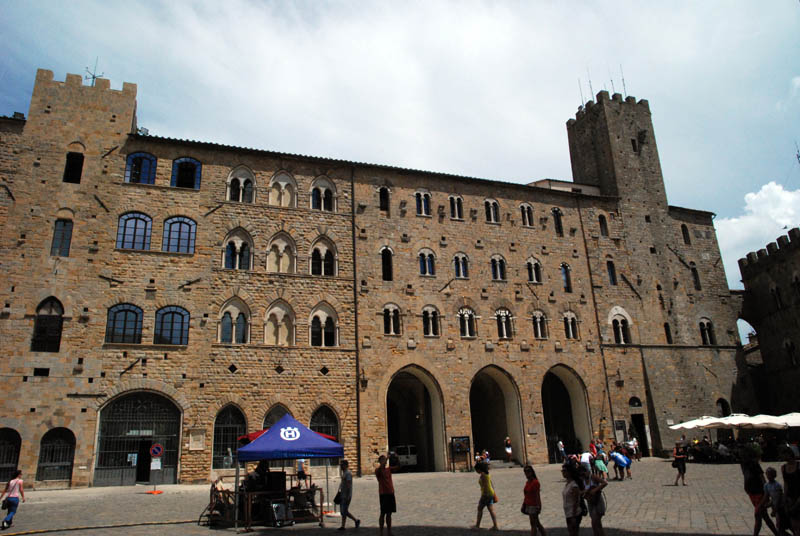
Volterra - Piazza dei Priori
The Piazza dei Priori is the heart of the medieval city of Volterra. It is overlooked by majestic buildings including the Palazzo dei Priori from which it takes its name, the Palazzo Vescovile, Palazzo Incontri and the Palazzo Pretorio. Very close, we visited the Baptistery of San Giovanni, an octagonal thirteenth-century religious building standing just in front of the Duomo. It was supposedly set up in the seventh century at the site of a Roman temple dedicated to Sun worship. The façade is decorated with horizontal bands of white and dark green marble and has a Romanesque Portal. Beside that altar is a marble font (1502) by Andrea Sansovino. The baptismal font (1759) by Giovanni Vaccà. Above it rises a statue of St John the Baptist (1771) by Giovanni Antonio Cybei. The holy water receptacle is an ancient Roman sarcophagus.
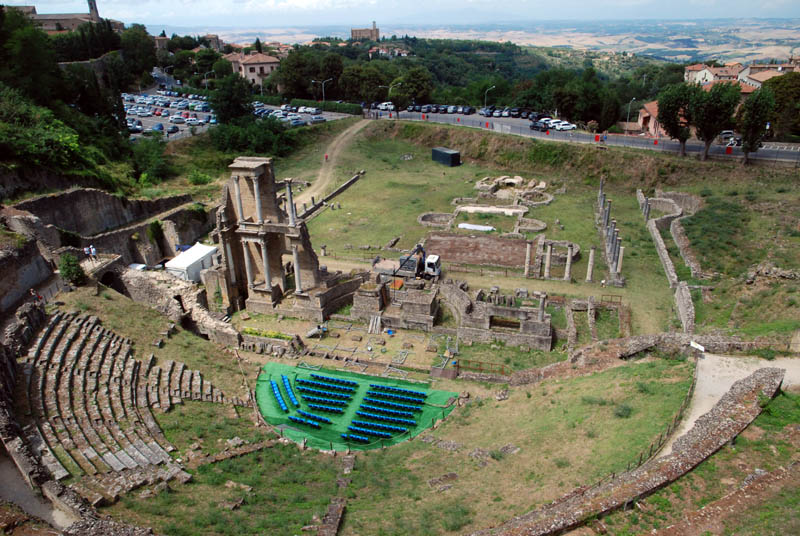
Volterra - Roman theatre
The Volterra Cathedral, also known as the Cathedral of Santa Maria Assunta, is a Romanesque-style church. It was constructed in the 12th century. The cathedral features a striking façade with intricate sculptures and a bell tower that offers panoramic views of the city. Inside, visitors can admire the beautiful frescoes and artwork, including the Deposition by Rosso Fiorentino and the Chapel of the Sacrament with a tabernacle by Mino da Fiesole. It is a popular tourist destination and an important religious site for the local community.. The rectangular bell tower is from 1493. The last place we visited in Volterra was the Roman Theatre, which was built in the 1st century AD. It was originally used for performances and events such as plays, music, and gladiatorial contests. The theatre could accommodate up to 3,500 spectators and featured impressive architectural elements, including a stage, orchestra pit, and seating areas. Although the theatre fell into disrepair over the centuries, it was rediscovered and partially restored in the 1950s.
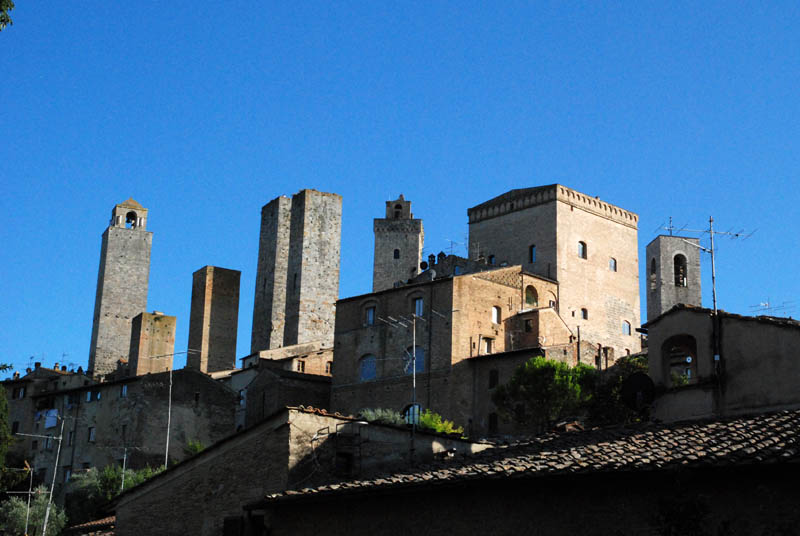
San Gimignano
(in 31 Km.) San Gimignano: San Gimignano is a small medieval town located in the Tuscany region of Italy. Known for its well-preserved towers, it has been designated a UNESCO World Heritage Site. The town's history dates back to the Etruscan period, and it became an important center of trade and commerce during the Middle Ages. San Gimignano is famous for its medieval architecture. While in other cities, such as Florence, most or all of their towers have been brought down by wars, catastrophes, or urban renewal, San Gimignano has managed to conserve fourteen towers of varying heights, for which it is known internationally. The reason for those towers from the 12th, 13th and 14th centuries has to do with the commercial, cultural and artistic flourishing of this municipality, which was an obligatory stop on the Via Francigena that linked Rome with France. Its strategic importance generated wealth in many of the families who, as a sign of their economic power, had their own tower erected.
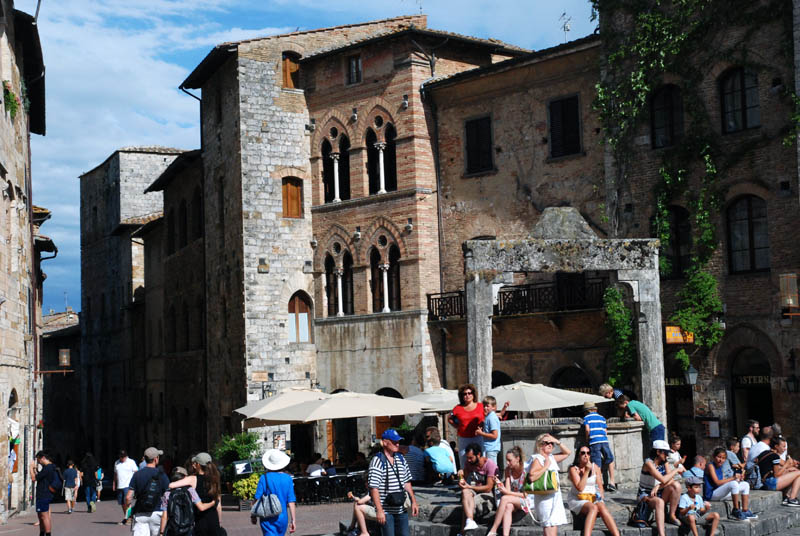
San Gimignano - Piazza Della Cisterna
Piazza della Cisterna, entered from Via San Giovanni, is the main square of the town. It is triangular in shape and is surrounded by medieval houses of different dates, among them some fine examples of Romanesque and Gothic palazzos. At the centre of the piazza stands a well which was the main source of water for the town's residents. The structure dates from 1346. Although much of it has been renewed in the late 20th century, parts of the paving date from the 13th century. At the southern end is the Becci arch, the ancient city gate of the first circle of the early medieval walls. This gate is flanked by the large parallelepipeds of the Becci (on the left) and Cugnanesi (on the right) towers. The north side is characterised by the palazzo dei Cortesi and the suggestive tower of the Diavolo, surrounded by the houses of the Cattani.
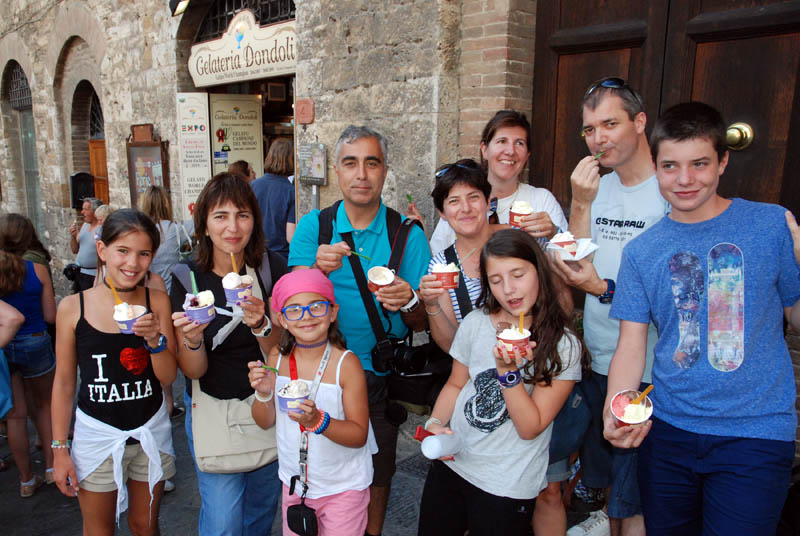
San Gimignano - Gelateria Dondoli
In this square is located the Gelateria Dondoli, winner of the prize for the best gelato in the world several years ago. We can't miss the chance to taste them. After enjoying the gelato, we move on to the adjacent Piazza del Duamo, where we find the Collegiata di Santa Maria Assunta and the Torre Grossa. The Torre Grossa was built in the 14th century and is the tallest tower in the city, reaching a height of 54 metres. The tower was used as a defensive fortification and as a symbol of the town's power and wealth. Today, you can climb to the top of the tower to enjoy panoramic views of the city and its surroundings. The Palazzo Comunale dates from the late 13th century, and was built on the ruins of an existing building between 1289 and 1298. The façade is characterised by arched windows, with the lower half of the frontage built with stone, and the upper part in brick. building contains important fresco decorations, a museum and a gallery. The entrance ticket allows access to both the Palace and the Torre Grossa.
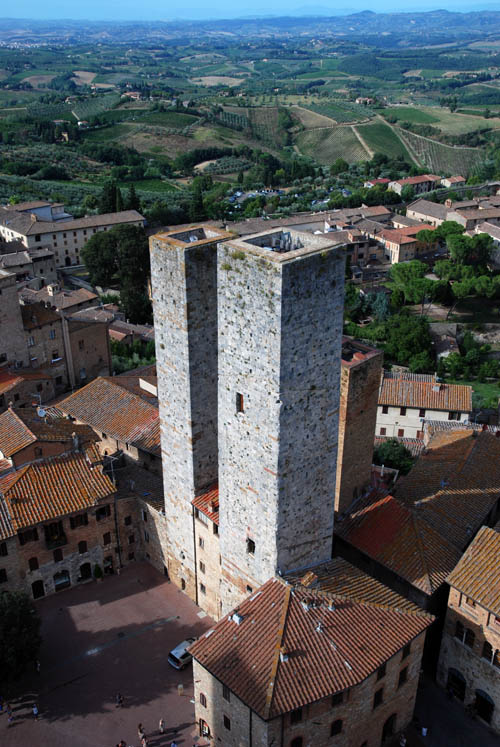
San Gimignano - View from Torre Grossa
The Collegiata di Santa Maria Assunta is a Roman Catholic church. The Collegiate Church stands on the west side of Piazza del Duomo, so named although the church has never been the seat of a bishop. It is a notable example of Tuscan Romanesque architecture, built in the 12th century. The church is famous for its frescoes, which were painted by several artists from the Sienese school in the 14th and 15th centuries. The frescoes depict scenes from the Old and New Testaments, as well as the lives of various saints. The church is a UNESCO World Heritage Site and a popular tourist attraction. Its frescoes being described by UNESCO as "works of outstanding beauty". has a distinctive bell tower that rises above the town and can be seen from miles away. The church also houses a museum that contains a collection of liturgical items and artworks.
(in 42 Km.) Quercegrossa: We transfer to our accommodation from where we will visit for the following days the cities of Siena, Monteriggioni and Florence for the second time.