Travel to Switzerland, Liechtenstein, Innsbruck and Bavaria
Day 8 Erpfendorf - Höllentalklamm - Oberammergau (189 Km.)
We started the day early in Erpfendorf, preparing for our transfer to Oberammergau, located in the Bavarian Alps. We left the village and followed a route that took us through several mountain passes and valleys, moving steadily westward. The journey offered a variety of landscapes, including stretches of forest, alpine meadows, and small towns along the way. As we crossed the border from Austria into Germany, there were no formal checks, but traffic naturally slowed in this area. Our main objective for the day was to visit the Höllentalklamm Gorge near the village of Grainau, so we planned our route to arrive there by late morning. Before reaching Grainau, we passed through Garmisch-Partenkirchen, a well-known town in the region that serves as a gateway to many outdoor attractions, including Zugspitze, Germany’s highest mountain.
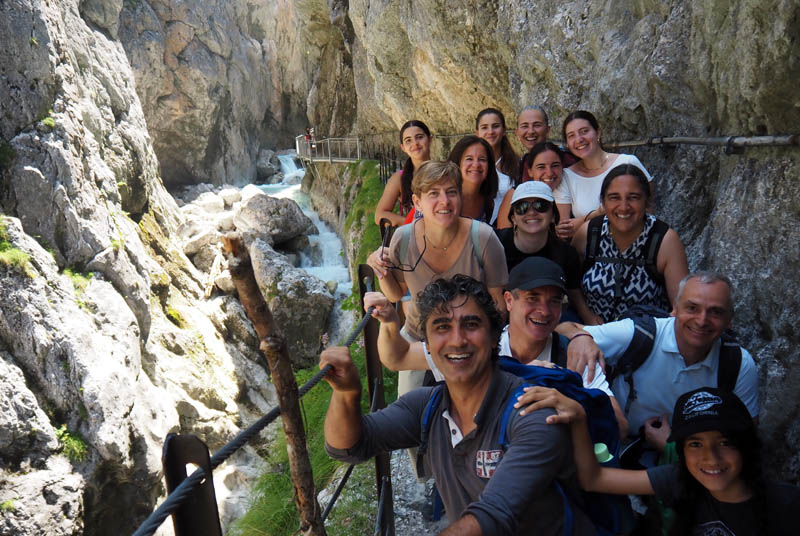
Höllentalklamm
(in 163 Km.) Höllentalklamm: Upon arrival in Grainau, we followed the signs directing visitors to the parking area for Höllentalklamm. The gorge is part of a protected natural reserve and requires a ticket for entry, which we purchased at the booth near the trailhead. Before reaching the gorge itself, there is an initial approach hike of several kilometers. This trail begins at the base of the valley and ascends gradually, following the course of the Hammersbach River. Along the way, the path passes through mixed forests and areas of open meadow, with several wooden bridges crossing over the river at different points. The trail is well-maintained, with occasional information panels providing background on the area’s geology and wildlife. Several small rest stops with benches are located along the route, allowing hikers to pause before continuing the ascent. This section of the hike is moderately challenging due to the steady incline, but it remains accessible to visitors with proper footwear and preparation. After about an hour of walking, we reached the Höllentalklamm Gorge entrance hut, where there is a small building providing information, refreshments, and additional ticket control.
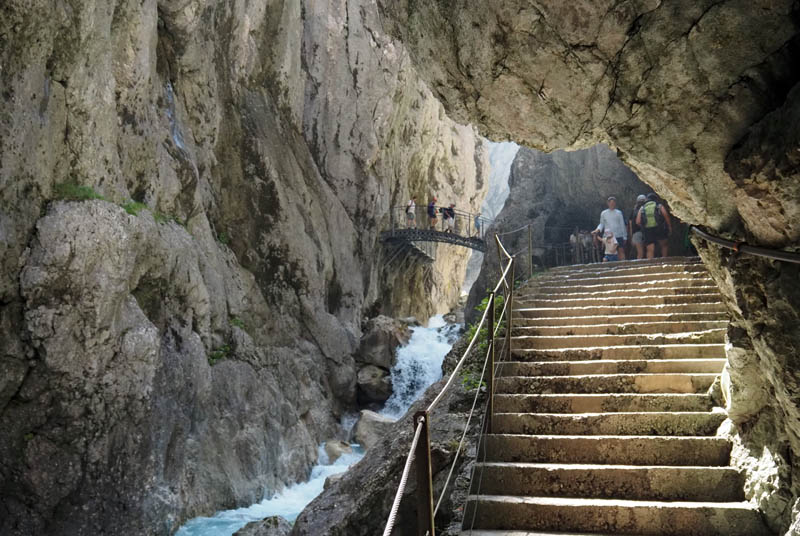
Höllentalklamm
From this point onward, the route enters the gorge proper, where the river has carved a deep, narrow channel through the rock over thousands of years. A system of wooden and metal walkways has been constructed along the sides of the gorge, often anchored directly into the rock walls. In some sections, tunnels have been cut through the rock, requiring visitors to pass through enclosed passages before emerging back into the open gorge. These tunnels are unlit, so visitors are advised to bring a flashlight or use a headlamp to navigate safely. The sound of the rushing water is constant and loud, echoing off the walls of the narrow canyon. Small waterfalls cascade from the cliffs above, and in certain areas, mist and spray reach the walkway, creating slippery conditions that require careful footing. Safety railings line the entire route, and there are designated viewing points where the path widens slightly, allowing for safe observation of the river below. The gorge has a distinct microclimate, remaining cooler and more humid than the surrounding forest, even during summer months.
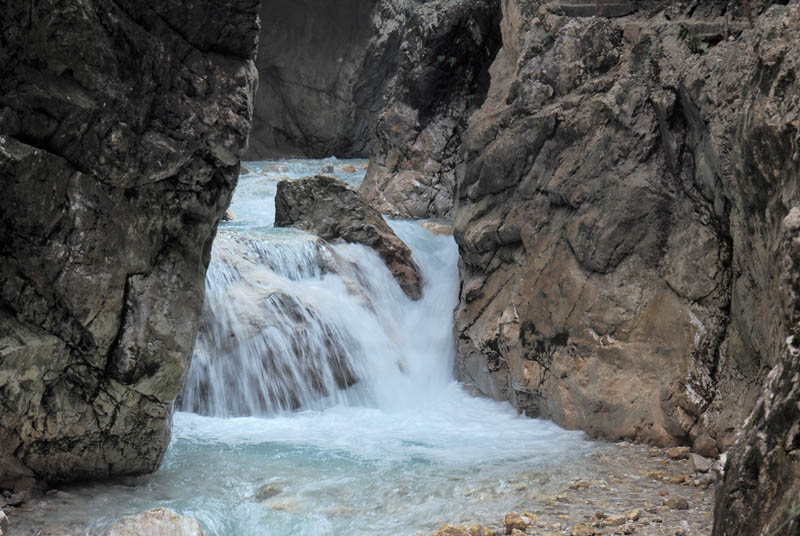
Höllentalklamm
As we advanced deeper into the Höllentalklamm, the rock walls grew steeper and the gorge narrower, creating dramatic natural formations. The walkway alternated between open sections and tunnel passages, each turn revealing new perspectives of the river and rock formations. Interpretive signs placed along the route explained the history of the gorge’s formation, which is tied to glacial and river erosion over many millennia. The route through the gorge takes approximately thirty to forty minutes at a steady walking pace, though visitors often take longer to stop and observe specific features. At the upper end of the gorge, the walkway emerges into a wider alpine valley where the river flows more gently. This area provides a stark contrast to the enclosed canyon below. There is a small alpine hut here that serves drinks and light meals to hikers and marks the transition point for those who wish to continue further into the surrounding mountain trails.
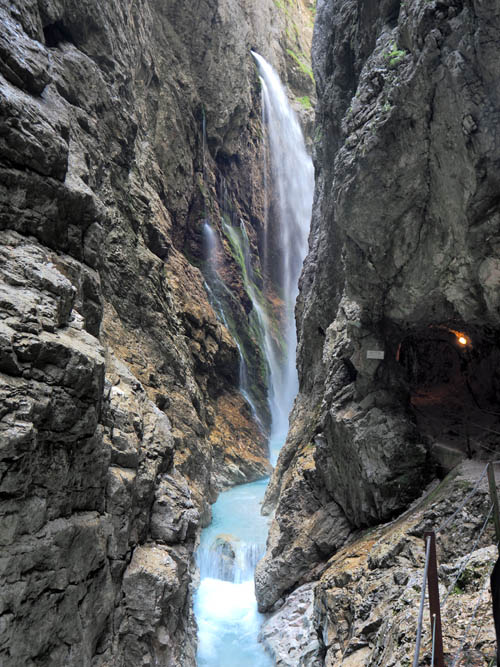
Höllentalklamm
Once we completed our visit to the gorge, we retraced our steps back through the same walkway, returning to the lower hut near the entrance. Descending along the approach trail toward Grainau was significantly quicker than the ascent, and we paused briefly at several bridges to observe the river from different angles. Along the way, we noted the junctions leading to other hiking routes branching off from the main trail, many of which are popular with visitors planning full-day excursions. Upon reaching the parking area, we took a short break before the final drive to Oberammergau, where we would be staying for a couple of nights. The route between Grainau and Oberammergau passed through Ettal, a small village known for its Benedictine monastery, visible from the main road as we continued our journey through the region.
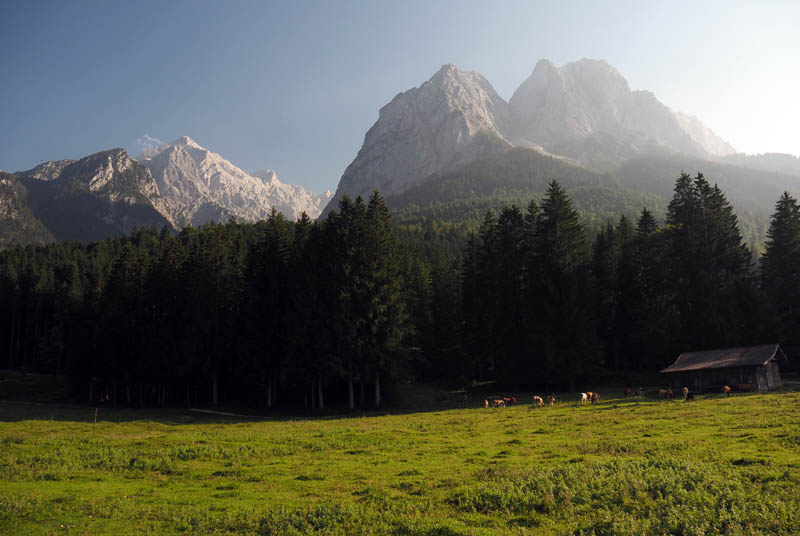
Waxenstein and Zugspitze peaks
(in 126 Km.) Oberammergau: We arrived in Oberammergau in the early evening, checking into our accommodation before heading out to explore the town’s historic center. Oberammergau is widely known for its Passion Play, a religious performance held every ten years, as well as for its traditional painted houses, or Lüftlmalerei, which depict biblical and folkloric scenes on their facades. The town layout is compact, with narrow streets lined by traditional Bavarian architecture. For dinner, we went to the Hotel Alte Post, located in the center of town. The hotel’s restaurant serves regional dishes and occupies a prominent position near the main square. After our meal, we had a short walk through the surrounding streets to see some of the most significant buildings in the town.
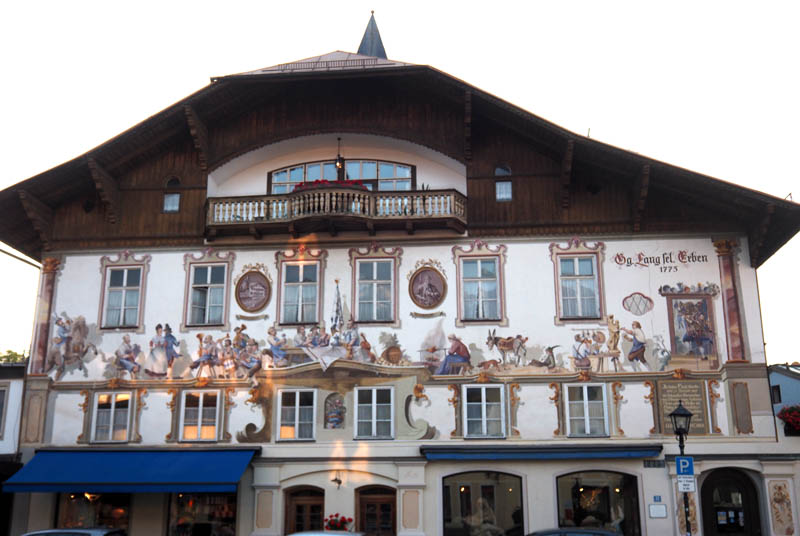
Oberammergau - Dorfstraße 20
One of the highlights of this walk was the Ludwig Thoma Geburtshaus, the birthplace of Ludwig Thoma, a well-known German author and satirist. The house is recognizable by its distinctive painted facade, which, like many buildings in Oberammergau, features detailed decorative artwork. Although the building can be admired from the outside, it is also possible to learn more about its history through informational signs placed nearby. After viewing this and other decorated buildings in the vicinity, we returned to our accommodation.