Travel to Switzerland, Liechtenstein, Innsbruck and Bavaria
Day 5 Innsbruck - Krimml Waterfalls - Erpfendorf (178 Km.)
Innsbruck, the capital of the Austrian state of Tyrol, has a long and significant history due to its strategic location in the Inn Valley, surrounded by the Alps. The city developed as a crossing point on the important trade routes between northern and southern Europe. Its name literally means "bridge over the Inn," referring to the bridge that facilitated trade and travel across the river. During the Middle Ages, Innsbruck grew under the influence of the Counts of Tyrol and later became part of the Habsburg Empire. In the 15th century, Emperor Maximilian I chose Innsbruck as one of his main residences, bringing prosperity and cultural development to the area. Over the centuries, the city continued to expand, playing a crucial role in commerce, governance, and alpine culture. In modern times, Innsbruck has become known as a center for winter sports and alpine tourism, hosting the Winter Olympic Games in 1964 and 1976. Its historical center still preserves many medieval and baroque buildings, making it a point of interest for visitors exploring the region.
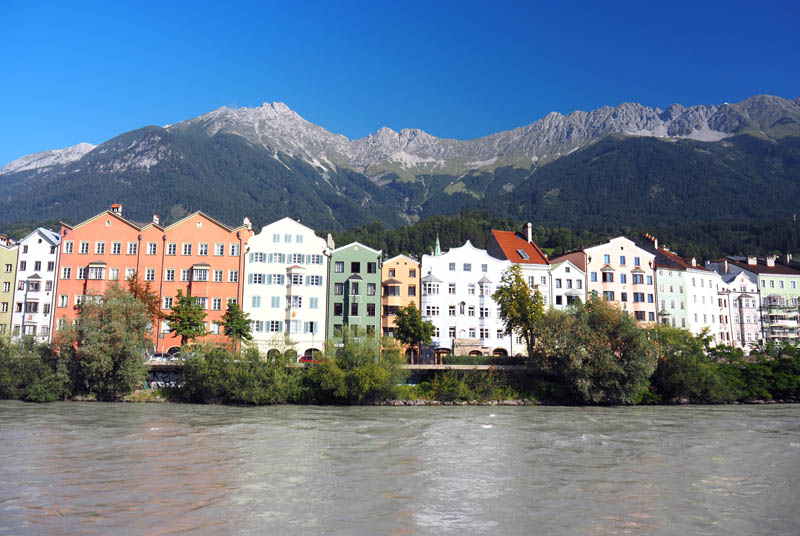
Innsbruck - Inn River and colorful houses
We began our walking tour of Innsbruck at Marktplatz, the central square located next to the Inn River. From this square, there is a clear view of the colorful row of houses situated along the opposite bank of the river, a well-known feature of the city’s landscape. The square itself is surrounded by various historical and modern buildings, serving as a starting point for several pedestrian streets that lead deeper into the old town. We spent some time walking along the riverbank to observe the architectural layout and the alignment of the buildings before returning to Marktplatz to continue toward the heart of the historic district. From here, we followed the narrow streets lined with traditional shops and cafes, making our way toward one of Innsbruck’s most famous landmarks, the Golden Roof.
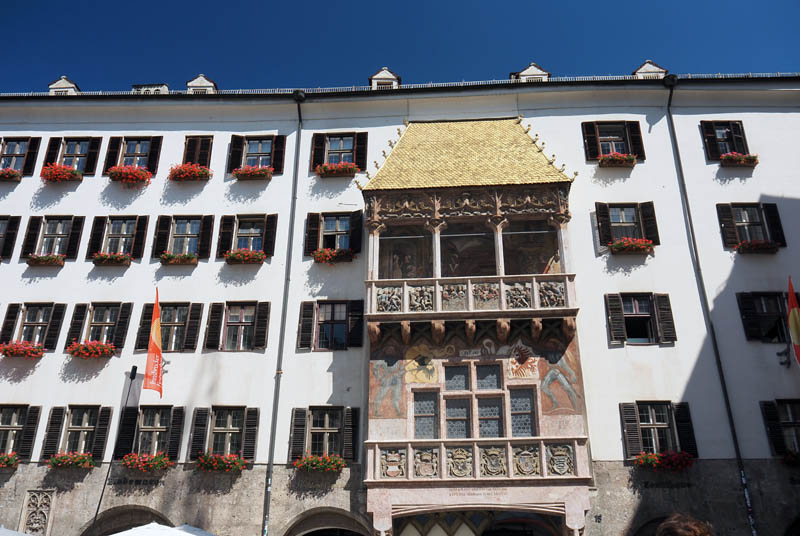
Innsbruck - Golden Roof
The Golden Roof, or Goldenes Dachl, was built at the beginning of the 16th century for Emperor Maximilian I. The structure features a balcony topped with 2,657 gilded copper tiles, which give it its name. Historically, the balcony served as a viewing platform for the emperor and his court to observe events and festivals held in the square below. Today, the building houses a museum dedicated to Maximilian I and the history of the region. Near the Golden Roof stands the City Tower (Stadtturm), a 15th-century tower that once served as a watchtower and a symbol of municipal power. Although we decided not to climb to the top, the structure remains one of the most visible features of the old town skyline. In this same area, we also stopped to see Helblinghaus, a richly decorated baroque building known for its elaborate stucco façade, which contrasts with the surrounding medieval architecture.
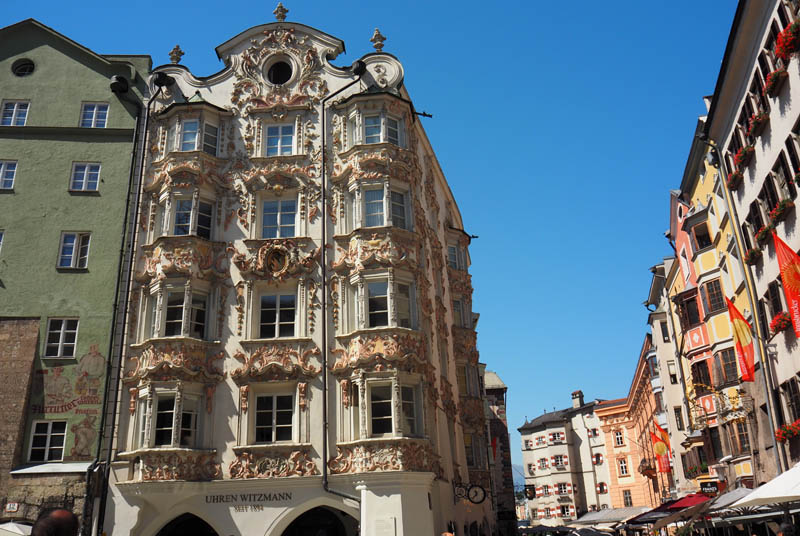
Innsbruck - Helblinghaus
Our visit continued with the Hofburg, the imperial palace of Innsbruck, which dates back to the time of Emperor Maximilian I and was later expanded under Empress Maria Theresa in the 18th century. The palace features baroque and rococo interiors and includes several halls and chambers historically used for governance and imperial ceremonies. We explored its main rooms, such as the Giant Hall (Riesensaal), which is adorned with portraits of the imperial family and decorated with marble and gold details. The Hofburg provides insight into the Habsburg dynasty's presence in the Tyrol region and its political importance in the broader context of the Austrian Empire. After completing our tour of the palace, we continued our walk toward the nearby cathedral.
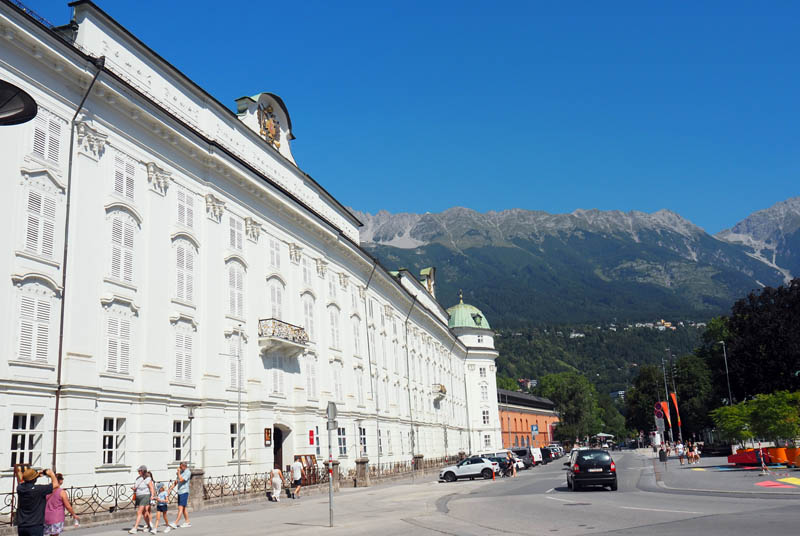
Innsbruck - Hofburg
Next, we visited the Cathedral of St. James (Dom zu St. Jakob), Innsbruck’s main Catholic church. The cathedral, built in the early 18th century, is an example of baroque architecture and features two tall towers flanking its main façade. Inside, the church houses significant works of art, including the famous painting of the Virgin Mary known as "Maria Hilf" by Lucas Cranach the Elder. The cathedral also contains the tomb of Archduke Maximilian III, Grand Master of the Teutonic Order. We spent time exploring the interior, observing the frescoes and the ornate main altar. Its central location makes it one of the key religious sites in Innsbruck and a natural stop on a walking tour of the city center.
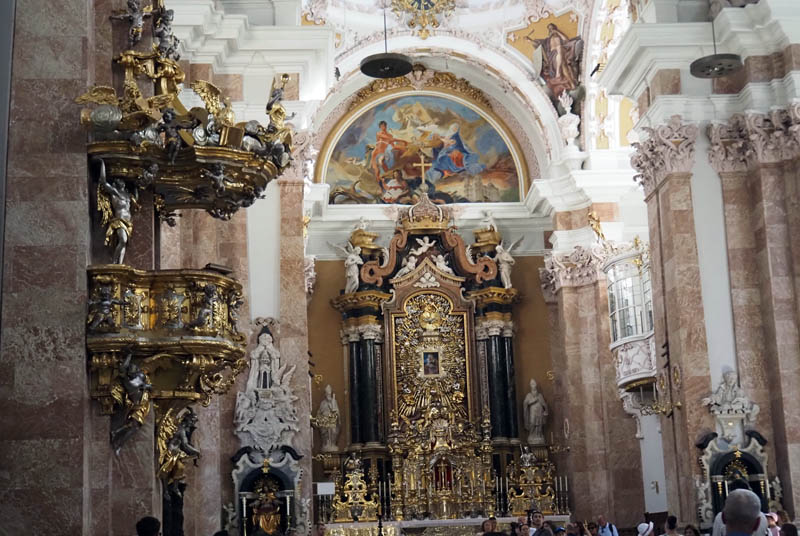
Innsbruck - Cathedral of St. James
(in 101 Km.) Krimml Waterfalls: Although Innsbruck has many other attractions, including museums, alpine viewpoints, and the Bergisel ski jump, we decided to conclude our visit to the city at this point in order to continue our journey to the Krimml Waterfalls, located west of Innsbruck. The drive took us through scenic alpine landscapes as we left the urban area and traveled into a more mountainous region. Along the way, we passed through small villages and forested areas typical of the Tyrol region. Upon arrival at Krimml, we parked near the entrance to the waterfall area and prepared to begin the hiking route that follows the course of the falls.
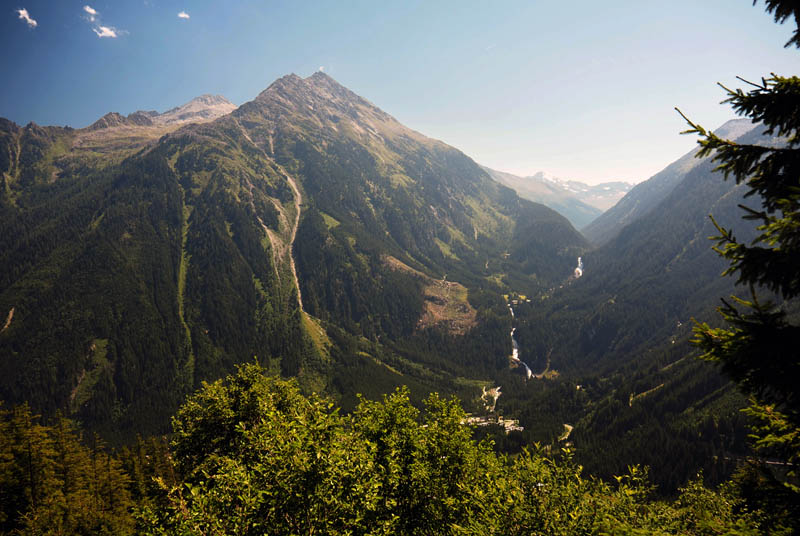
Krimml Waterfalls
The Krimml Waterfalls are the highest in Austria and among the tallest in Europe, with a total height of 380 meters divided into three main drops. They are located within the Hohe Tauern National Park, a protected area known for its diverse alpine flora and fauna. The falls are formed by the Krimmler Ache River, which originates from glacial meltwaters higher up in the mountains. From the base of the waterfalls, a well-maintained trail ascends alongside the cascades, offering multiple viewpoints along the way. The sound of the water increases as one approaches the first viewpoint, where it is possible to observe the immense volume of water plunging into the valley below. We began our ascent, following the path that winds through forested sections and open rocky areas, gradually gaining elevation.
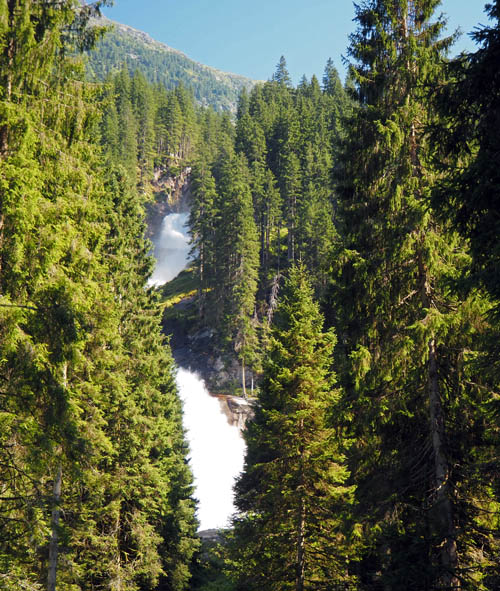
Krimml Waterfalls
Our hike continued until we reached the top of the second tier of the waterfalls, which is where a restaurant and rest area are located. Along the way, several observation points allowed us to stop and take in the different perspectives of the waterfalls and surrounding valley. The combination of mist from the falls and the alpine landscape creates a striking natural environment. Upon reaching the restaurant, we took some time to rest and enjoy a meal while overlooking the upper sections of the river and the surrounding mountain peaks. Afterward, we began our descent along the same route, stopping at a few additional viewpoints on the way down before returning to the parking area to conclude our visit.
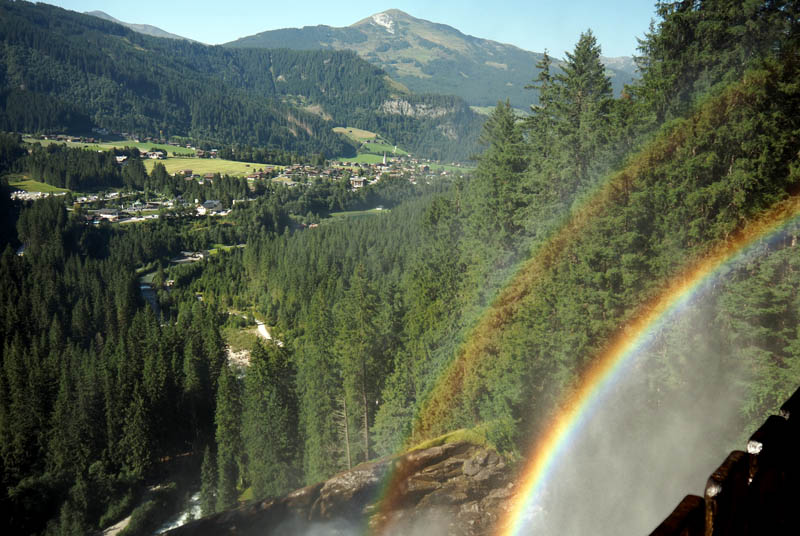
Krimml Waterfalls
(in 77 Km.) Erpfendorf: At the end of the day, instead of returning to Innsbruck, we continued driving east toward Erpfendorf, where we had our accommodation for the night. The route took us through picturesque valleys and mountain roads, offering views of the Austrian countryside at dusk. Arriving in Erpfendorf, we checked into our lodging, marking the end of a day that combined cultural exploration in Innsbruck with the natural scenery of the Krimml Waterfalls. This day provided a balance between urban heritage and alpine landscapes before continuing our journey through Bavaria.