Travel to Switzerland, Liechtenstein, Innsbruck and Bavaria
Day 1 Barcelona - The Gorges du Fier - Zurich (1074 Km.)
(in 747 Km.) The Gorges du Fier: The Gorges du Fier, located near Annecy in the Haute-Savoie region of France, are a natural formation created over thousands of years through the process of erosion. The river Fier, a tributary of the Rhône, carved its way through the limestone rock, gradually creating a deep and narrow canyon. This process began at the end of the last Ice Age when glacial meltwater and rainfall contributed to the river’s powerful flow, which slowly wore away the softer layers of stone. Over time, the gorge reached its current depth, with some sections reaching up to 30 meters high and only a few meters wide at the bottom. The area surrounding the gorge is characterized by karst landscapes, with underground water systems and numerous caves. These geological features have made the Gorges du Fier a site of scientific interest for studying the effects of water on rock formations and the natural history of the region.
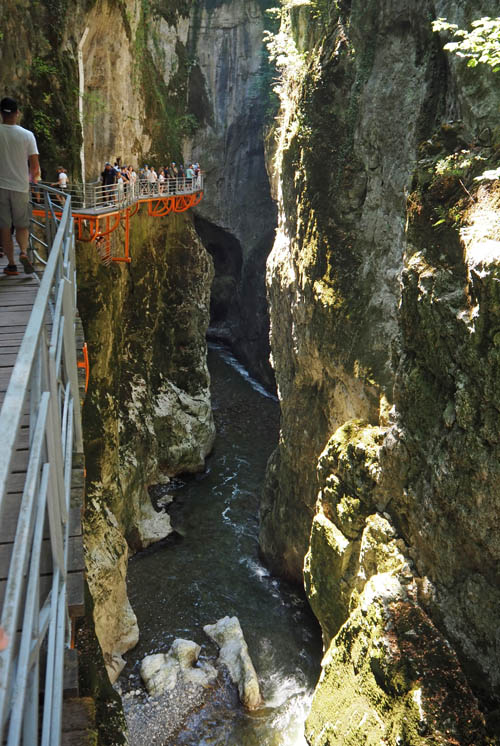
The Gorges du Fier
In the late 19th century, local authorities recognized the potential of the Gorges du Fier as a visitor attraction and began plans to make it accessible to the public. In 1869, construction started on a series of wooden walkways that would allow people to safely explore the gorge. These elevated walkways were anchored directly into the rock walls and designed to follow the natural curves and height variations of the canyon. The work required careful planning due to the narrowness of the gorge and the constant presence of water at its base. Over the years, the wooden structures were replaced and reinforced with metal components to ensure safety and durability. Today, the pathway extends for approximately 300 meters and provides a secure route suspended several meters above the river. This development has made it possible for visitors to experience the gorge while preserving its natural environment.
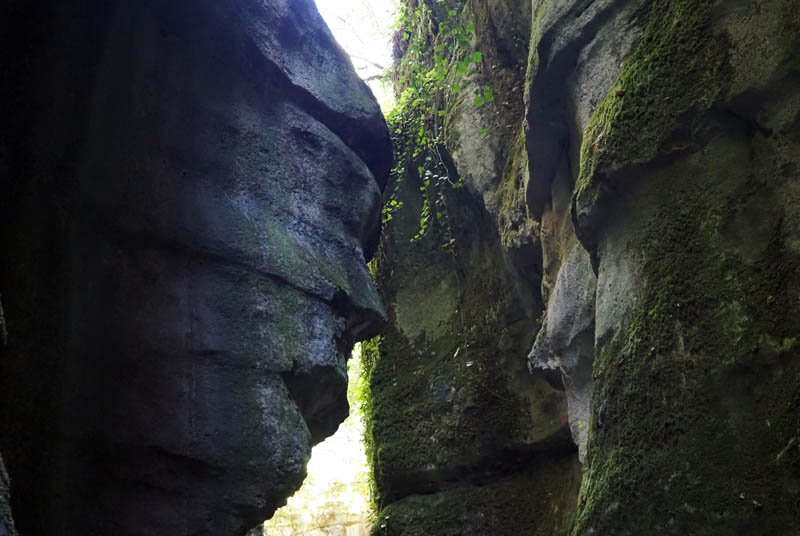
The Gorges du Fier - The two faces in the rock
We began our visit by following the main entrance path leading to the start of the elevated walkway. As we stepped onto the structure, we were immediately surrounded by the towering rock walls on both sides. The river Fier flowed swiftly beneath us, with sections where the water was calm and others where it rushed through narrow channels. Along the route, there are several points of interest marked with informational panels. One notable section is known as La Clairière des Curieux, a small open space within the gorge where the walls spread slightly apart, allowing light to filter down. Further along, we saw examples of the unique rock formations caused by centuries of erosion, including smoothed surfaces and circular potholes carved by the swirling water. The walkway allowed us to stop at several viewing points without obstructing the narrow passage for other visitors.
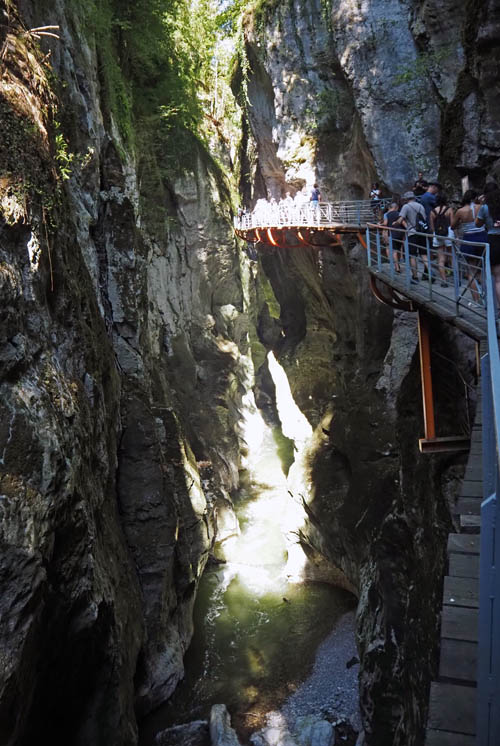
The Gorges du Fier
As we continued deeper into the gorge, the pathway gradually rose, providing different perspectives of the natural features. In some areas, the walls were so close together that it was possible to touch both sides at once. We reached a section where the river disappeared briefly under a natural rock bridge formed by erosion. Near the end of the route, there is an observation platform offering a view of the “Mer de Rochers”, or “Sea of Rocks,” a vast area filled with enormous limestone boulders scattered across the riverbed. These boulders were deposited during ancient floods and glacial activity. From this vantage point, we could also see how the river continues its course beyond the gorge, gradually widening as it flows toward the Rhône. The exit trail led us back through a wooded area, where we returned to the parking area to continue our journey.
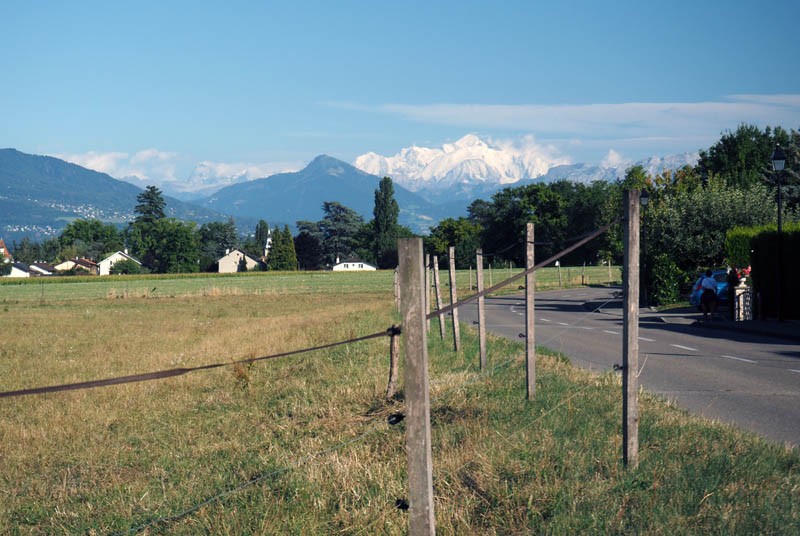
Mont Blanc
(in 327 Km.) Zurich: After leaving the Gorges du Fier, we headed toward our next destination, traveling along the highway toward Geneva. However, due to a traffic accident near the city, we were forced to exit the motorway and take a local road. This detour took us through rural areas and provided us with a clear view of the surrounding Alpine landscape. Along this route, we were able to see Mont Blanc, the highest peak in Western Europe, standing prominently in the distance. The mountain, which reaches 4,809 meters in elevation, is located on the border between France and Italy and is part of the Mont Blanc massif. From our position, we could distinguish its snow-covered summit and several of the surrounding peaks. After rejoining the highway beyond the accident site, we continued our trip toward Glattbrugg in Zurich, having completed our visit to the gorge and the unplanned scenic detour.