Travel to Switzerland, Liechtenstein, Innsbruck and Bavaria
Day 3 Zurich - Stein am Rhein - Rhine Falls - Zurich (137 Km.)
(in 54 Km.) Stein am Rhein: Stein am Rhein, located where the Rhine River flows out of Lake Constance, has origins that date back to Roman times. The settlement was initially established as a small outpost due to its strategic location along important trade routes. During the early Middle Ages, a Benedictine monastery was founded here, which played a crucial role in the town’s development. By the 11th century, Stein am Rhein had grown into a fortified settlement with city walls and towers. In the 15th and 16th centuries, the town prospered from trade, river transport, and craftsmanship, which led to the construction of richly decorated houses that are still preserved today. The buildings in the old town are known for their painted façades depicting historical and allegorical scenes. Throughout the centuries, Stein am Rhein remained a small but significant urban center, maintaining its medieval layout and structures, which today form part of its cultural heritage.
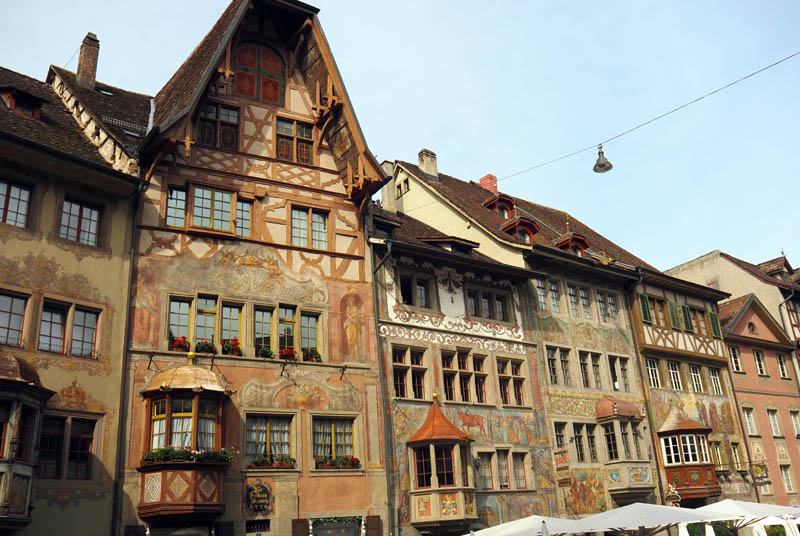
Stein am Rhein - Understadt
We began our visit at the Untertor, the lower gate of the town, which historically marked the main entrance for travelers coming from the river and surrounding areas. Passing through the gate, we entered Understadt, the lower part of Stein am Rhein, characterized by narrow streets and medieval architecture. Walking along this route, we encountered several notable buildings, such as the Brodlaube, known for its distinctive timber framing, and the Haus Hirzli, recognizable by its façade painting. Among the most remarkable structures are the Weisser Adler (White Eagle), Bürgerasyl, Vordere Krone, and Rother Ochsen, each displaying different architectural styles and historical motifs. These buildings reflect the prosperity of the merchants and guilds that once occupied them. Continuing our route, we reached the Rathaus, or town hall, which has historically served as the administrative center and features elaborate decorative elements on its exterior.
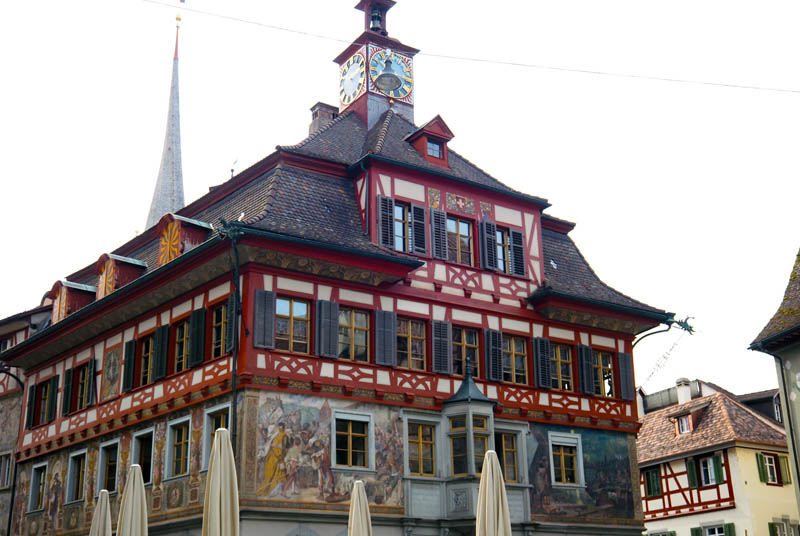
Stein am Rhein - Rathaus
From the town hall, we walked to the former Benedictine Abbey of St. Georgen, an important religious complex founded in the early medieval period. The abbey includes a church, cloisters, and residential quarters, all of which provide insight into monastic life during its time of operation. Inside, there are preserved frescoes, wooden carvings, and exhibits about the history of the monastery and its role in the region. After visiting the abbey, we made our way back toward our starting point, following a different route. We passed through the Obertor, the upper gate of the town, and continued along Fronhofgass, a street lined with historical houses that leads toward the parking area. This final stretch allowed us to observe additional parts of the old fortifications and the urban structure of Stein am Rhein before concluding our visit to the town.
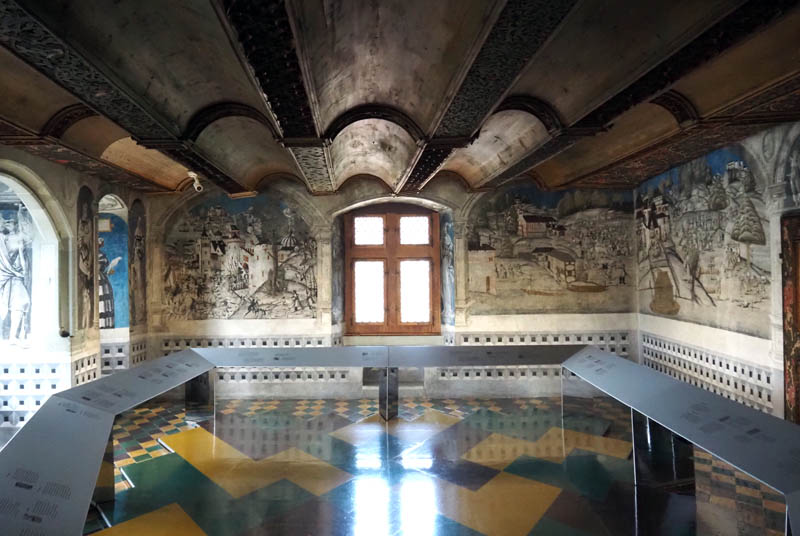
Stein am Rhein - Benedictine Abbey of St. Georgen
(in 22 Km.) Rhine Falls: On our way to Zurich, we made a brief stop at the Rhine Falls, located near the town of Schaffhausen. These waterfalls are among the largest in Europe, with a width of 150 meters and a height of 23 meters. The flow of water varies throughout the year, reaching its peak during the summer months due to snowmelt in the Alps. We visited the northern bank, where there are designated viewing platforms that allow close observation of the falls. From this vantage point, it is possible to see the main rock formations in the middle of the river, which divide the water into several powerful streams. The surrounding area includes walking paths, informational panels, and access points for boat rides, although we limited our stop to the observation area before continuing our journey to Zurich.
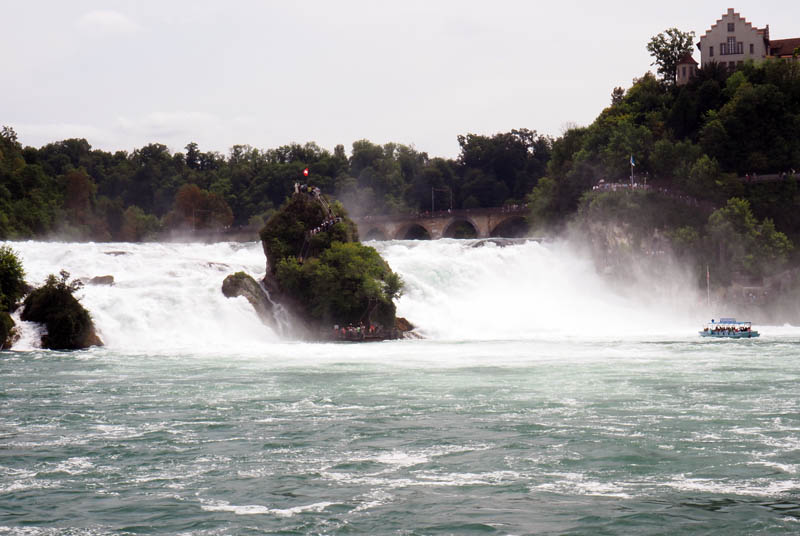
Rhine Falls
(in 51 Km.) Zurich: Zurich, the largest city in Switzerland, has a history that stretches back to Roman times when it was known as Turicum, serving as a customs post and river crossing point. During the Middle Ages, it developed into an important commercial and political center, joining the Swiss Confederation in 1351. Over the centuries, Zurich became a hub of trade, banking, and craftsmanship, with its location on Lake Zurich and the Limmat River contributing to its prosperity. In the 16th century, it played a major role in the Protestant Reformation under the leadership of Ulrich Zwingli. By the 19th century, Zurich had transformed into a modern city with industrial development, railways, and cultural institutions. Today, it serves as Switzerland’s financial capital and an important center for international organizations, education, and transportation, while preserving a historic old town that reflects its medieval origins.
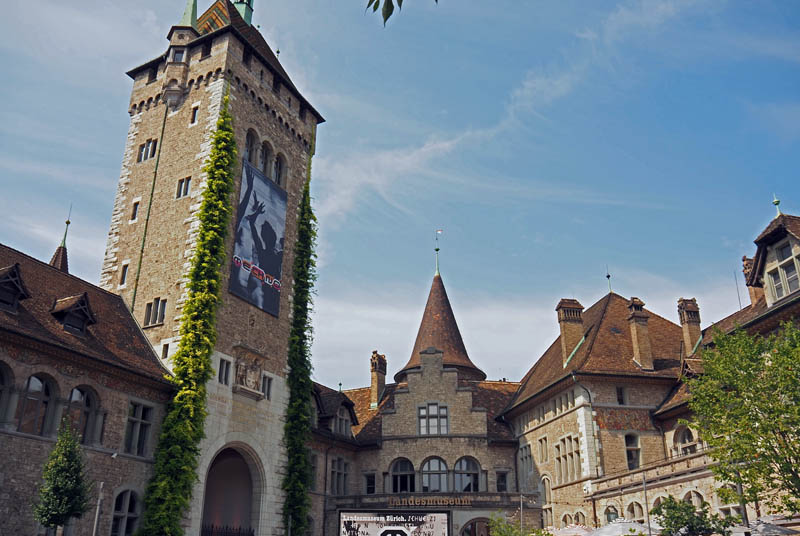
Zurich - Swiss National Museum
We started our visit in Zurich near the Swiss National Museum. Although we did not enter the museum, we observed its exterior, which resembles a medieval castle with towers and courtyards. From there, we crossed to the Hauptbahnhof, the city’s main railway station. Inside the station’s main hall, a suspended sculpture known as the Guardian Angel, created by the French artist Niki de Saint Phalle, is prominently displayed. The hall is also used for exhibitions and seasonal markets. After spending time in this area, we boarded the Polybahn, a funicular railway that connects the lower part of the city with the ETH Zurich area. Upon reaching the upper station, we walked to a viewpoint located near the university buildings, from where we could see the rooftops of the old town and the course of the Limmat River.
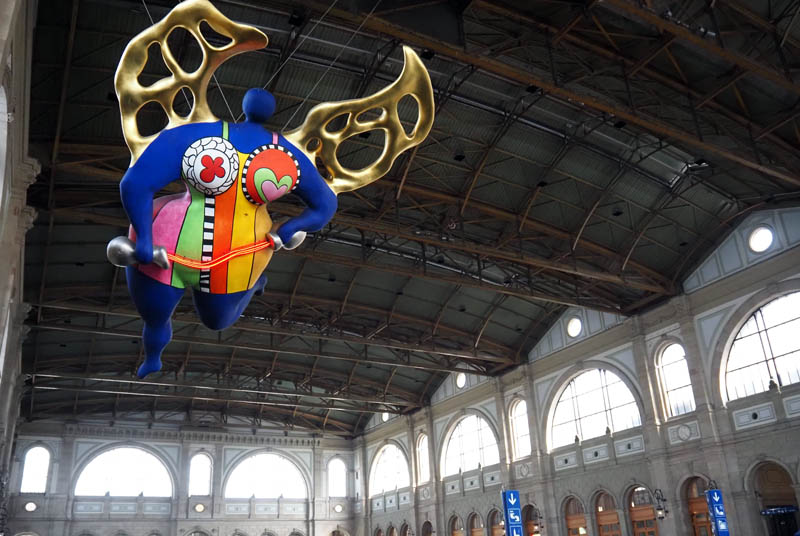
Zurich - Hauptbahnhof (Guardian Angel)
Descending back toward the city center, we walked along the river to the Rathaus, Zurich’s historic town hall. This building, dating from the late 17th century, stands directly above the water and was used for municipal meetings and administrative functions. From there, we proceeded to the Grossmünster, or Great Minster, a Romanesque-style church founded in the 12th century. According to tradition, it was established by Charlemagne and later became a center of the Protestant Reformation under Zwingli. Nearby, we saw the Helmhaus, an exhibition space housed in a historical structure, and the Wasserkirche, a church built on a small island in the river that was later connected to the mainland. Each of these sites illustrates different aspects of Zurich’s religious and cultural history.
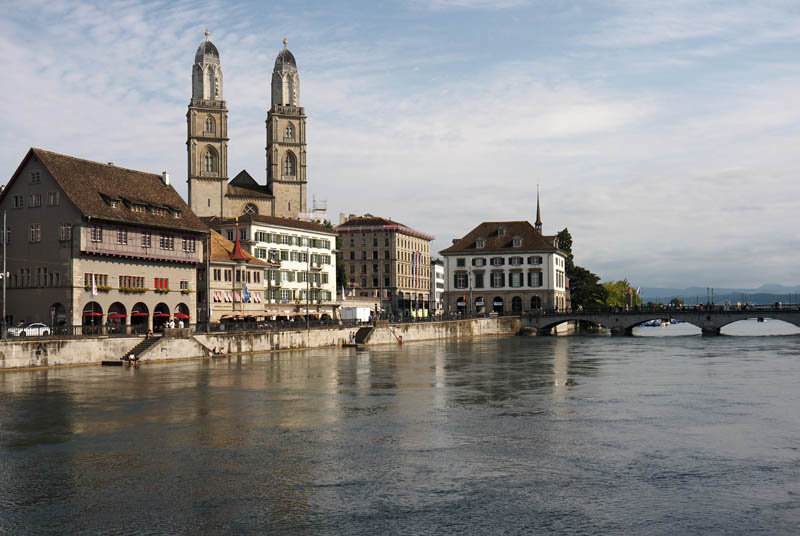
Zurich - Grossmünster
Continuing along the riverbank, we reached the Opernhaus, Zurich’s opera house, built in the late 19th century. Its neoclassical façade and location near the lake make it one of the city’s most recognizable landmarks. From there, we walked toward the Fraumünster, or Church of Our Lady, originally founded as a convent in the 9th century. The church has undergone numerous modifications over the centuries and is known for its stained-glass windows by artist Marc Chagall. Adjacent to the Fraumünster is Münsterhof, a large square surrounded by historical buildings. We also visited St. Peter’s Church, notable for having the largest clock face in Europe. Each site along this route represents a different era of Zurich’s architectural and religious development.
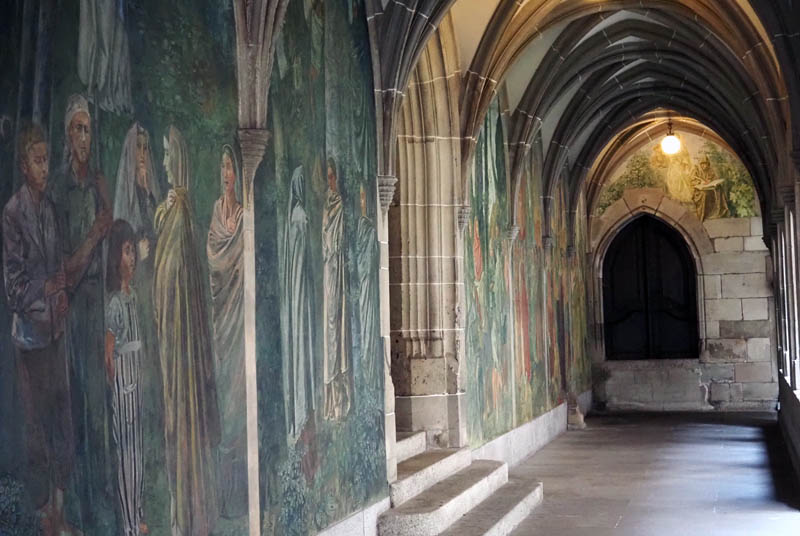
Zurich - Fraumünster - Cloister
We concluded our day by heading to Lindenhof, a hill and public square that provides an elevated view over Zurich’s old town and the Limmat River. Historically, Lindenhof was the site of a Roman fort and later a medieval castle, serving defensive purposes for the settlement. Today, it remains an open space surrounded by trees and walking paths. From this location, it is possible to identify many of the landmarks we had visited earlier, such as the Grossmünster towers and the river bridges. After spending some time at the viewpoint, we descended back into the city center, completing our route through Zurich and concluding our day’s exploration.
(in 10 Km.) Zurich (Glattbrugg): Returning to our accommodation.