Travel to Switzerland, Liechtenstein, Innsbruck and Bavaria
Day 9 Oberammergau - Linderhof - Ettal - Oberammergau (34 Km.)
(in 14 Km.) Linderhof: We began the day by traveling to Linderhof Castle, one of the three palaces built by King Ludwig II of Bavaria. Upon arrival, we parked in the designated visitor area and followed the marked pathway leading to the palace grounds. Linderhof is the smallest of Ludwig’s castles but the only one he lived to see completed. The construction began in 1869 and was inspired by the French absolutist style, particularly the architecture of Versailles. The palace is set within a landscaped park, which includes terraces, fountains, and statues arranged in a symmetrical layout. Before entering the palace, we walked through the outer gardens, which are divided into different levels connected by staircases and pathways. Signage along the way provides historical context about the design of the park and the monarch’s vision for this secluded royal residence.
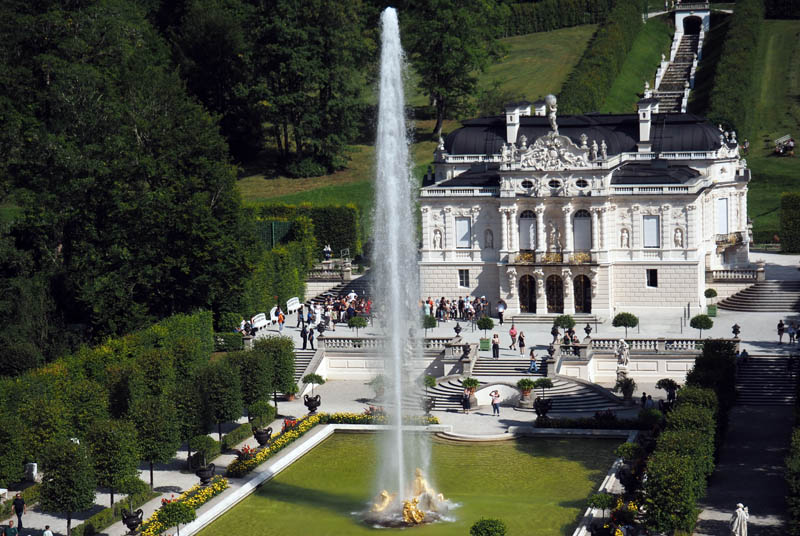
Linderhof palace
Inside Linderhof Palace, the tour follows a fixed route through several elaborately decorated rooms. We started in the Vestibule, which serves as the entrance hall and contains marble columns and ornate ceiling frescoes. From there, we proceeded to the Audience Chamber, a space used for formal receptions, and the Dining Room, which features a unique mechanical table that could be lowered into the kitchen below, allowing meals to appear without servants entering the room. This system reflected Ludwig II’s desire for privacy during his meals. The highlight of the interior is the Hall of Mirrors, a richly adorned room lined with mirrors on every wall, designed to create the illusion of infinite space. Throughout the palace, intricate carvings, gilded details, and luxurious fabrics emphasize the opulent style favored by the king. Photography is not permitted inside, and visitors are guided by a staff member who explains the function and history of each room. The tour concludes at the Bedroom, where Ludwig spent much of his time and which is dominated by a large bed with an elaborate canopy.
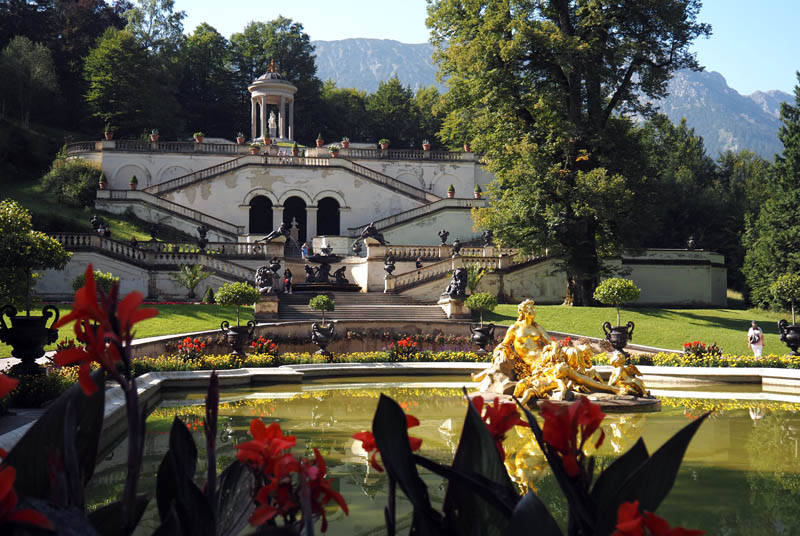
Linderhof palace - Terrace and Venus temple
After finishing the palace tour, we explored the outer areas of the park more thoroughly. One of the most notable features is the Neptune Fountain, located directly in front of the palace, aligned with the central axis of the gardens. We also visited several pavilions scattered throughout the grounds, each with unique architectural designs inspired by different cultures. From there, we followed a marked path leading to the Venus Grotto, a man-made cave constructed specifically for Ludwig II’s private entertainment. The grotto was designed to replicate the setting of the opera Tannhäuser by Richard Wagner, a composer Ludwig greatly admired. Inside the grotto, there is an artificial lake with a swan-shaped boat, as well as a lighting system that was revolutionary for its time, capable of changing colors to create different atmospheric effects. The grotto also had a heating system to ensure comfort during the king’s private performances. Although Ludwig II often watched these performances alone, the site today is open to visitors, and informational panels explain the technical innovations that went into its construction.
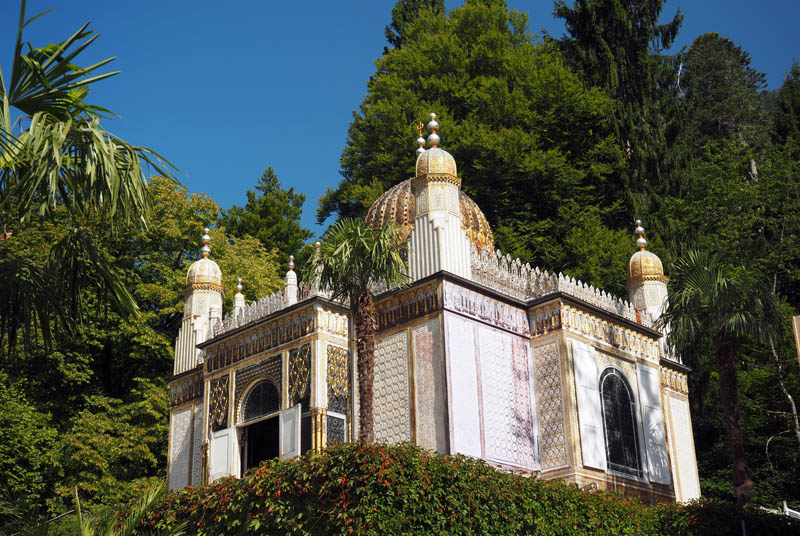
Linderhof palace - Maurisches Kiosk
Leaving the grotto, we returned to the main park area and completed our visit by walking a loop trail that passes by several vantage points offering views of the surrounding landscape. Along this route, we encountered additional structures, including a Moorish Kiosk and a Moroccan House, both of which reflect Ludwig’s fascination with exotic architecture. These buildings were imported from world fairs and incorporated into the grounds as unique features. Once we had covered the main highlights of Linderhof Castle, we made our way back toward the entrance area, where there are facilities such as restrooms, a gift shop, and a small café. This marked the end of our visit to the palace complex, which had included both the interior rooms and the surrounding park features. From here, we departed by car for our next destination, Ettal Abbey, located a short distance away.
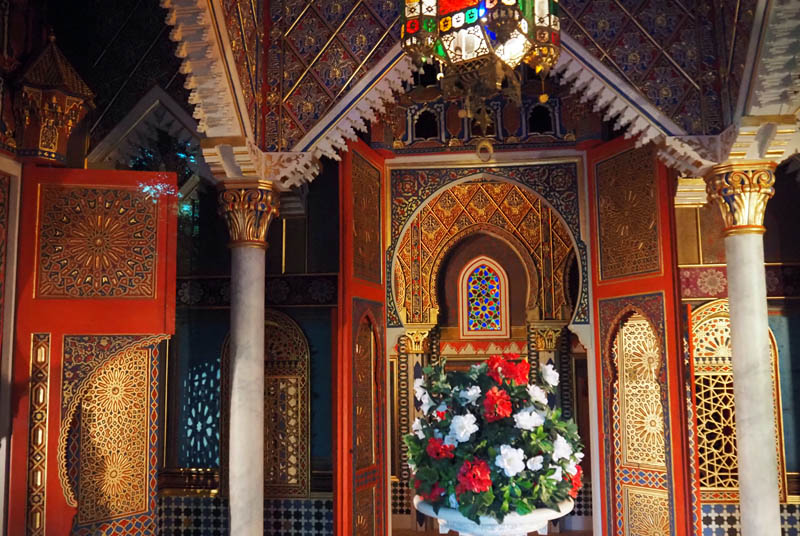
Linderhof palace - Moroccan House
(in 11 Km.) Ettal: Upon arriving at Ettal Abbey, we parked in the visitor lot near the entrance and approached the impressive complex. Ettal Abbey is a Benedictine monastery founded in 1330 by Emperor Ludwig the Bavarian. The abbey has been an important religious and cultural center in the region for centuries. The main building is dominated by a large baroque-style church with a prominent dome that is visible from a considerable distance. Inside the church, we observed its richly decorated interior, which features stucco work, frescoes, and elaborate altars. The central fresco on the dome depicts scenes from the life of the Virgin Mary, while the side chapels are dedicated to various saints. The abbey continues to function as a monastery, with monks residing on-site and participating in daily religious services. Visitors are welcome to attend services or simply admire the architecture and art. Information boards throughout the church provide context about its construction and the monastic life that continues within the complex.
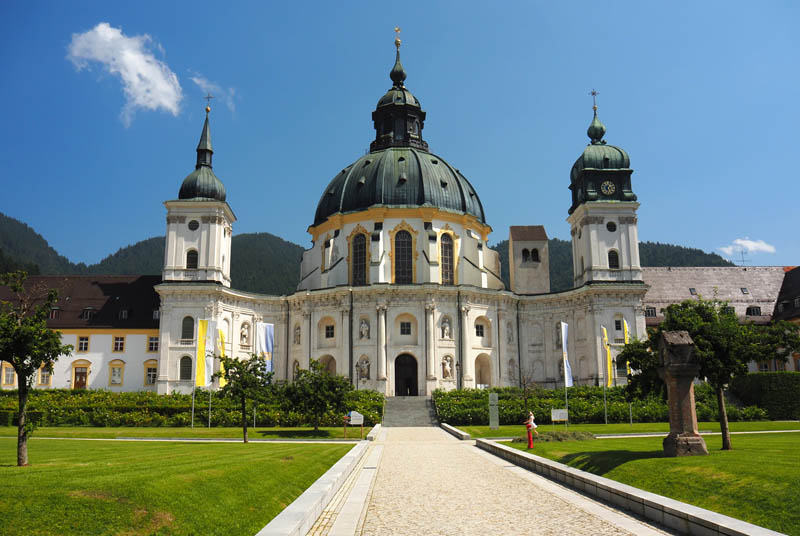
Ettal Abbey
After visiting the church, we explored other parts of the abbey grounds, which include a brewery and a dairy production facility. The monastery is known for producing traditional Ettal beer and various types of cheese, both of which are sold directly to visitors. We stopped at the tasting area, where we sampled a selection of the monastery’s cheeses, ranging from soft to hard varieties, each with distinct flavors resulting from traditional production methods. We also tasted some of the local beers, brewed according to the Benedictine tradition, with recipes that have been refined over centuries. The tasting area includes informational panels explaining the brewing and cheesemaking processes, as well as the history of these trades within the monastic community. Before leaving, we purchased several products to take with us, including cheese and bottled beer, which are packaged for travelers.
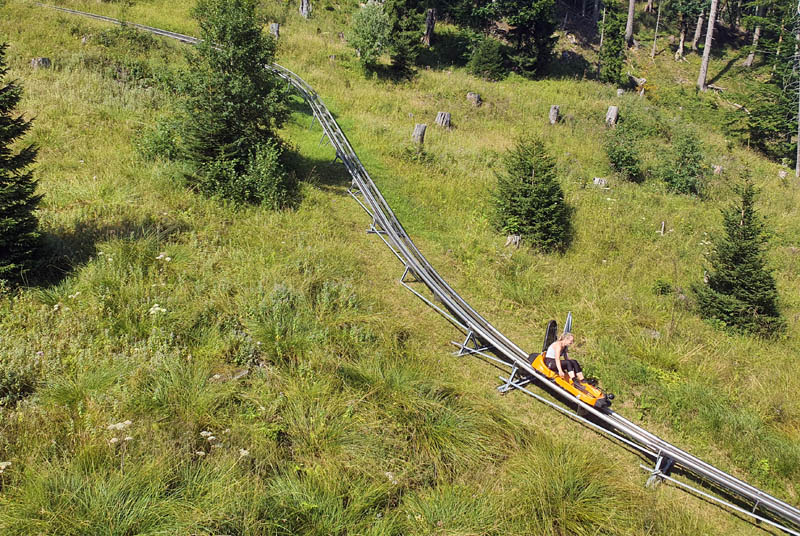
Alpine Coaster Oberammergau
(in 6 Km.) Alpine Coaster Oberammergau: Our next stop was the Alpine Coaster Oberammergau, a popular recreational attraction located on the outskirts of the town. The Alpine Coaster consists of a winding track that descends from the hillside, allowing riders to control their speed using hand brakes. After purchasing our tickets, we took the lift to the top of the hill, which provided a clear view of the track layout and surrounding area. The descent covers several hundred meters and includes curves, dips, and straight sections, all designed for a safe yet exciting experience. Safety instructions are given before boarding, emphasizing the proper use of the brakes and spacing between riders. Once at the top, we boarded individual carts and began the ride, adjusting our speed as needed while navigating the twists and turns. At the base station, there are facilities including restrooms, a snack bar, and a viewing area for those waiting to ride or observing friends and family.
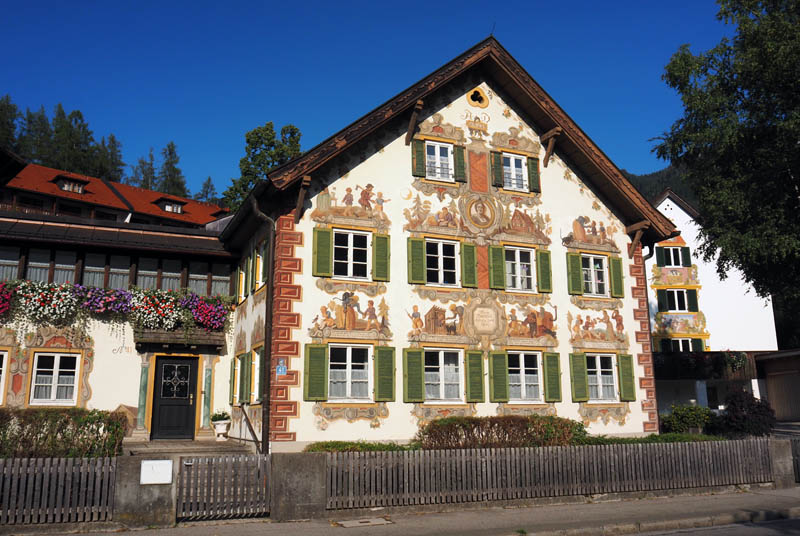
Oberammergau - Hansel and Gretel House
(in 3 Km.) Oberammergau: Later in the afternoon, we returned to Oberammergau to explore its historic center on foot. Our walking tour began with a visit to the Hänsel und Gretel Heim, commonly referred to as the House of Hansel and Gretel. This building is notable for its facade, which is decorated with paintings depicting scenes from the Brothers Grimm fairy tale. The artwork includes detailed imagery of the forest, the witch’s house, and the characters of Hansel and Gretel themselves. The tradition of painting houses with biblical, folkloric, or historical scenes is a distinctive feature of Oberammergau, known locally as Lüftlmalerei. From here, we continued along the narrow streets of the old town, observing other examples of this decorative art along the way.
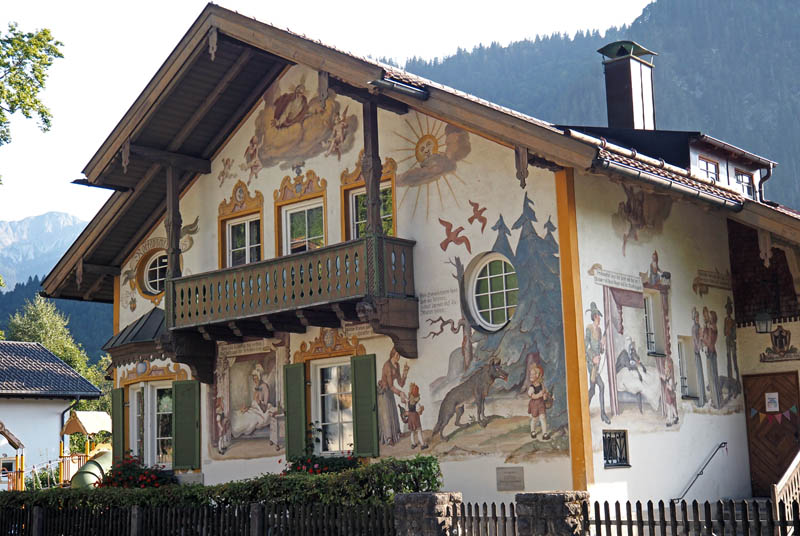
Oberammergau - Little Red Riding Hood house
Our next stop was the Rotkäppchen Haus, or House of Little Red Riding Hood. Similar to the previous building, its facade features detailed painted scenes, in this case from the fairy tale of Little Red Riding Hood. The paintings depict key moments from the story, including Little Red Riding Hood’s meeting with the wolf and the final scene at the grandmother’s house. The building is located near the center of town, making it easily accessible from other points of interest. After viewing the exterior, we proceeded to the Church of Saints Peter and Paul, the main parish church of Oberammergau. The church is built in a baroque style and contains a richly decorated interior with frescoes, altars, and a prominent organ. It remains an active place of worship, with regular services held throughout the week.
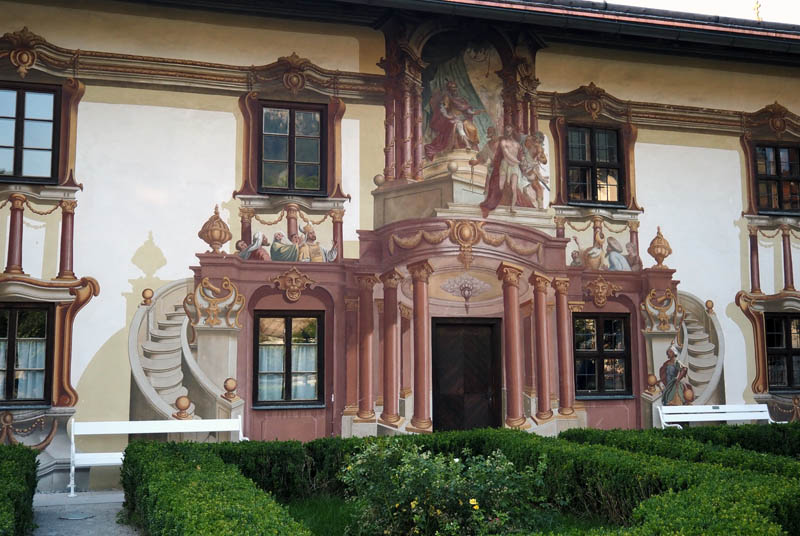
Oberammergau- Pilatus house
We concluded our walking tour with a visit to the Pilatushaus, one of the most significant historic buildings in Oberammergau. The facade of this house features intricate frescoes that portray scenes of Christ before Pontius Pilate, from which the building takes its name. Today, the Pilatushaus functions as a cultural center and hosts exhibitions of local crafts, including woodcarving, which is a traditional art form in the region. Inside, visitors can watch artisans at work, providing insight into techniques that have been passed down through generations. After exploring the Pilatushaus, we spent some time walking through the nearby streets, observing additional painted houses and small shops selling regional products. With this, our day in Oberammergau came to an end, having included a diverse range of experiences from historic sites to cultural attractions and recreational activities.