Travel to Croatia
Day 9 Split - Šibenik - Krka National Park - Krk island (391 Km.)
(in 87 Km.) Šibenik: Šibenik is one of Croatia’s oldest and most fascinating coastal cities, with a history that dates back over a thousand years. Unlike many other Dalmatian towns founded by Greeks or Romans, Šibenik was established by the Croats in the 9th century, making it unique in the region. Over the centuries, it grew into an important strategic and cultural center, flourishing under Venetian rule in the 15th and 16th centuries. This was the golden age of Šibenik, during which its most famous landmark, the Cathedral of St. James, was built. The city later endured Ottoman invasions, Austrian rule, and Yugoslav history before becoming part of modern Croatia. Today, Šibenik is a charming blend of medieval architecture, lively squares, and stunning coastal views, offering visitors a perfect mix of history and beauty.
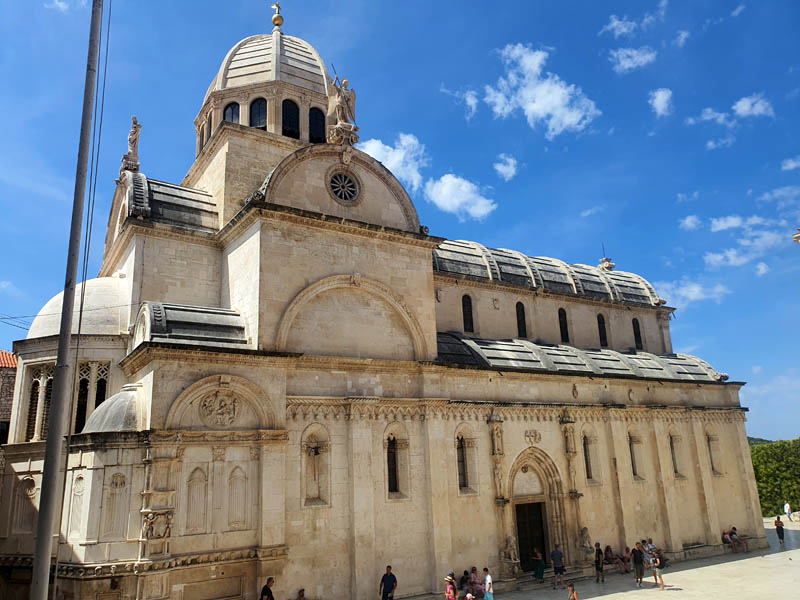
Šibenik - Cathedral of St. James
We began our exploration in the Old Town, a maze of narrow, winding streets, hidden courtyards, and stone staircases that climb up the hillside. The historic core of Šibenik is beautifully preserved, filled with traditional limestone buildings, charming cafés, and local artisan shops. Walking through these ancient streets felt like stepping back in time, as we admired the Gothic and Renaissance facades that lined the alleys. Along the way, we discovered the Church of the Assumption of the Blessed Virgin Mary (Crkva Uspenie Bogomatere), a small but historically significant church dating back to the 17th century. It stands quietly among the stone buildings, blending harmoniously into the old town’s architecture. Though modest in size, its peaceful atmosphere and historical significance made it a lovely stop on our journey.
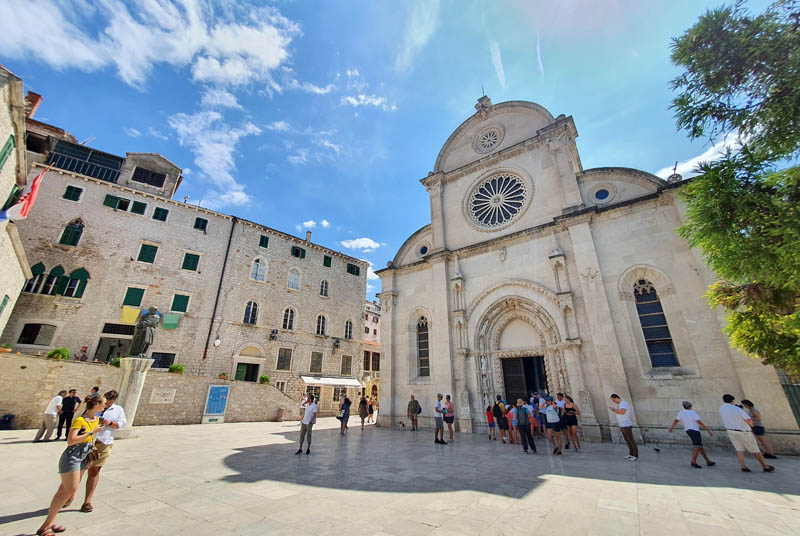
Šibenik - Cathedral of St. James
Continuing towards the heart of the city, we arrived at the Cathedral of St. James, the crowning jewel of Šibenik and a UNESCO World Heritage Site. This magnificent structure, built entirely of stone, is one of the greatest architectural achievements of the Renaissance period in Dalmatia. Designed by Juraj Dalmatinac, the cathedral is famous for its unique construction technique—without the use of mortar—and its intricate friezes of sculpted human heads, believed to represent the citizens of Šibenik at the time. Just outside the cathedral, we found ourselves in the Square of the Republic of Croatia, the main square of the city, surrounded by historic buildings and lively cafés. We took a moment to sit and soak in the vibrant atmosphere before heading to the medieval garden of St. Lawrence Monastery, a hidden gem tucked away in the old town. This beautifully restored garden, filled with aromatic herbs and flowers, provided a peaceful escape from the city’s bustling streets.
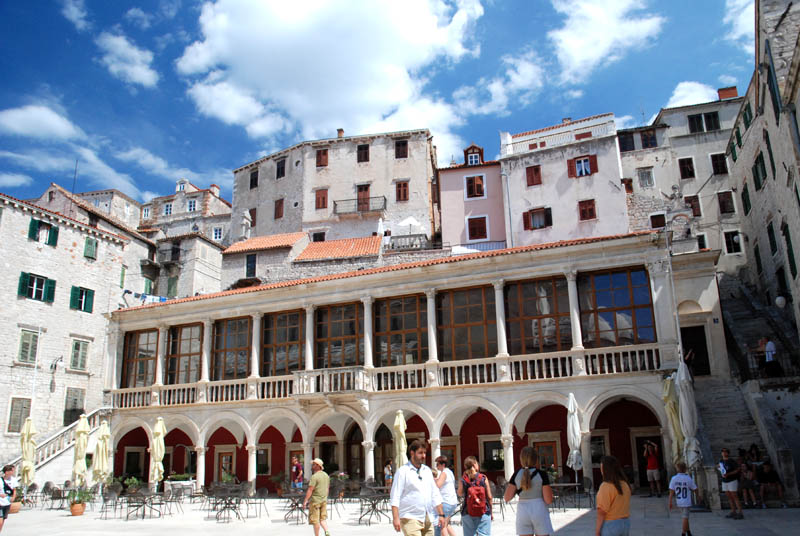
Šibenik - Square of the Republic of Croatia
For the grand finale of our visit, we climbed up to the Fortress of St. Michael, one of the most impressive medieval fortresses in Dalmatia. This fortress, which once served as Šibenik’s main line of defense, now offers breathtaking panoramic views of the Adriatic Sea and the surrounding islands. As we walked along its walls, we could easily imagine the battles that took place here centuries ago. Today, the fortress also serves as an open-air concert venue, adding a modern touch to its ancient history. Although we would have loved to visit the Barone Fortress, another well-preserved defensive structure located further up the hill, we decided to save it for another trip. We settled for photographing it from afar.
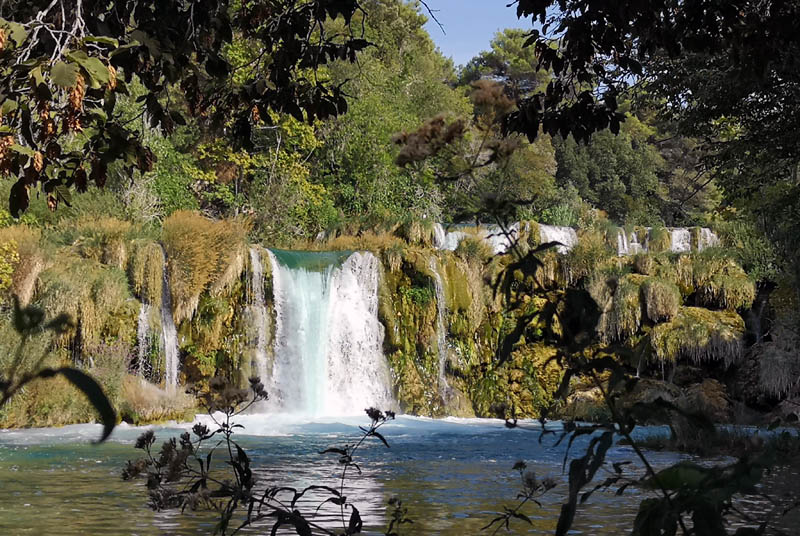
Krka National Park
(in 13 Km.) Krka National Park: Our adventure in Krka National Park began at the Lozovac entrance, the main gateway to one of Croatia’s most stunning natural reserves. Located in the heart of Dalmatia, this park is a paradise of waterfalls, lush greenery, and diverse wildlife. Named after the Krka River, which flows through the park creating breathtaking cascades, the area has been protected since 1985, ensuring the preservation of its unique ecosystem. As soon as we arrived, we were surrounded by the fresh scent of pine trees and the soothing sounds of flowing water, setting the perfect atmosphere for an unforgettable day immersed in nature.
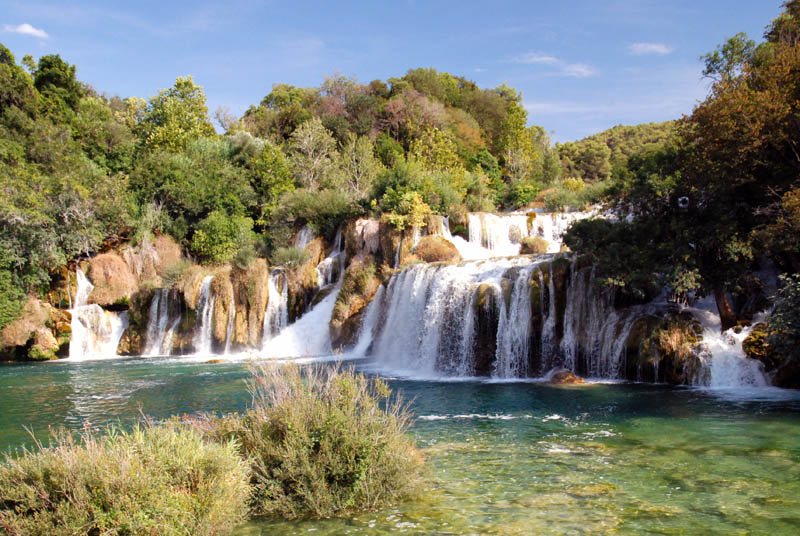
Krka National Park - Skradinski Buk
We followed the marked trail leading to Skradinski Buk, the most famous and impressive waterfall in the park. The trail took us through a series of wooden walkways that meandered over crystal-clear streams, offering stunning views of the surrounding forests and karst formations. Along the way, we spotted small cascades, fish swimming in the transparent waters, and even a few birds fluttering between the trees. As we approached Skradinski Buk, the thunderous sound of the waterfall grew louder, building our excitement. Finally, we arrived at the main viewpoint, where we were greeted by a spectacular sight—water rushing down a series of travertine terraces into a turquoise pool below, creating one of the most breathtaking landscapes we had ever seen.

Krka river
One of the things we had been most looking forward to was swimming in the waters of Skradinski Buk, as we had seen incredible photos of people enjoying a refreshing dip beneath the falls. However, we soon learned that since 2021, swimming has been prohibited to help preserve the delicate travertine formations and protect the park’s ecosystem. Although we were a bit disappointed, we understood the importance of conservation and were still able to enjoy the beauty of the falls from the viewing platforms. Instead, we took our time exploring the nearby historic water mills, which have been restored to show how locals once used the river’s power.
(in 291 Km.) Malinska: We stayed overnight in this village on the island of Krk.