Travel to Croatia
Day 8 Split - Trogir - Slatine beach - Okrug Gornji Beach - Split (76 Km.)
(in 27 Km) Trogir: Trogir is a small yet historically rich town on the Dalmatian coast, often referred to as an open-air museum due to its well-preserved medieval architecture. Founded in the 3rd century BC by Greek colonists, it later became part of the Roman Empire, flourishing as an important trading and cultural center. During the Middle Ages, Trogir thrived under Venetian rule, which shaped much of its stunning Romanesque, Gothic, Renaissance, and Baroque architecture. Today, it is a UNESCO World Heritage Site, attracting visitors eager to wander its narrow stone streets and immerse themselves in centuries of history. Our visit to Trogir begins at the North Gate, the main entrance to the medieval old town. This impressive stone gate, once part of the city's defensive walls, is crowned by a small statue of St. John of Trogir, the city's patron saint. As we pass through, we step into a maze of cobbled streets that transport us to another era, leading us towards the heart of the city.
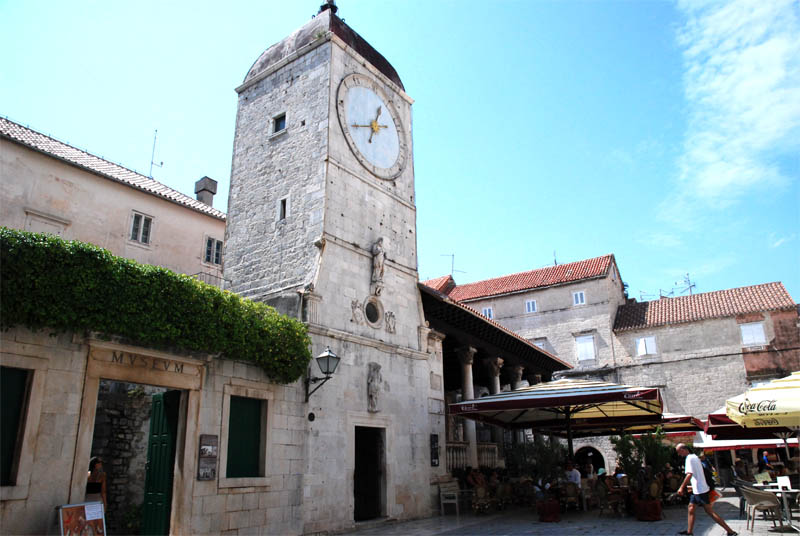
Trogir - Clock Tower
Our first stop is Ivana Pavla II Square, the vibrant center of Trogir, surrounded by some of its most iconic landmarks. In the middle of the square stands the magnificent Cathedral of St. Lawrence, a masterpiece of Romanesque-Gothic architecture. We take a moment to admire its stunning Radovan Portal, intricately carved in the 13th century with biblical scenes and medieval life details. Unable to resist, we climb the bell tower, where we are rewarded with breathtaking panoramic views of the city and the Adriatic Sea. Just opposite the cathedral, we find the Clock Tower and the City Loggia, once a gathering place where important decisions were announced. Its clock, with its distinctive blue face, is one of Trogir's most recognizable symbols. Next to it, we visit the Cipiko Palace, the former residence of one of the city’s most influential families. Its elegant Venetian-style windows and intricate stonework hint at the aristocratic splendor of Trogir's past.
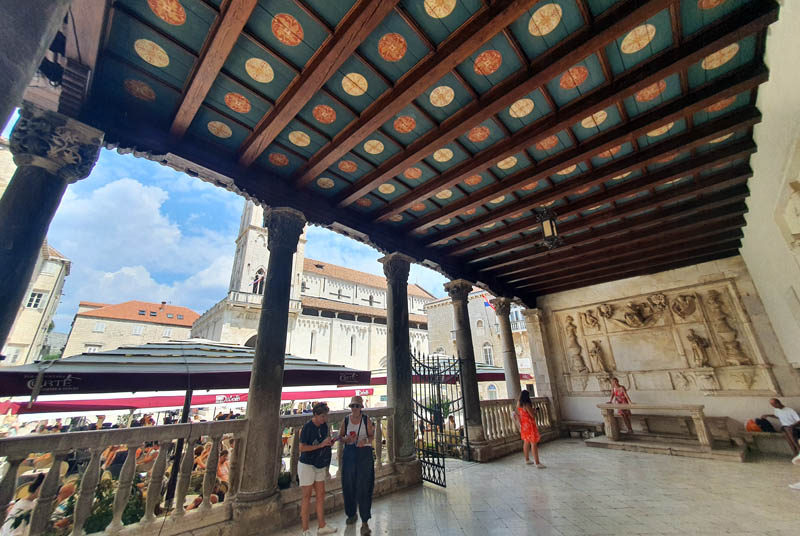
Trogir - City Loggia
Continuing our tour around the square, we arrive at the Town Hall, also known as the Duke’s Palace, which once housed the city's Venetian rulers. We pause for a moment to admire its ornate stone balconies and charming inner courtyard before heading towards the waterfront. The Riva is the perfect place to take a break, soak in the relaxed atmosphere, and enjoy the stunning views of the Adriatic as boats gently sway in the harbor. Our journey ends at the Kamerlengo Fortress, located at the western end of the promenade. Built in the 15th century by the Venetians to defend the city, its thick walls and sturdy towers still impress visitors today. We climb to the top, taking in the breathtaking view of Trogir at sunset—an image we will carry with us long after we leave. Exploring Trogir truly feels like traveling back in time, discovering a piece of Mediterranean history that remains alive in every street and stone.
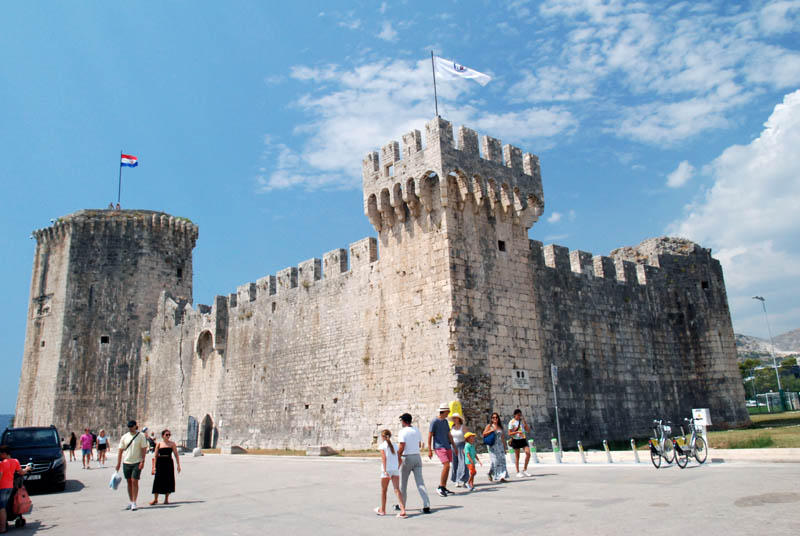
Trogir - Kamerlengo Castle
(in 8 Km) Slatine beach: Located on the eastern side of Čiovo Island, Slatine Beach is a peaceful retreat just a short drive or boat ride from Trogir. This beautiful beach, with its mix of pebbles and sand, was perfect for us because his relaxed and uncrowded atmosphere. The crystal-clear waters of the Adriatic invite visitors to take a refreshing swim, while the surrounding pine trees provide natural shade, making it an ideal spot to escape the summer heat. Slatine Beach is also known for its stunning views of Split and Marjan Hill, especially at sunset. Several beach bars and small restaurants nearby offer local seafood and refreshing drinks, allowing visitors to enjoy a leisurely day by the sea.
(in 10 Km) Okrug Gornji Beach: On the opposite side of the island, Okrug Gornji Beach presents a livelier and more dynamic coastal experience. Often referred to as the Copacabana of Trogir, this two-kilometer-long pebble beach is one of the most popular in the area, attracting both locals and tourists. The shallow, turquoise waters make it perfect for families, while water sports enthusiasts can enjoy activities like jet skiing, paddleboarding, and parasailing. Along the beachfront promenade, numerous bars, restaurants, and ice cream shops create a vibrant and festive atmosphere. Whether you're looking for a relaxed day in the sun or an active beach adventure, Okrug Gornji Beach offers the perfect blend of scenic beauty and lively energy.
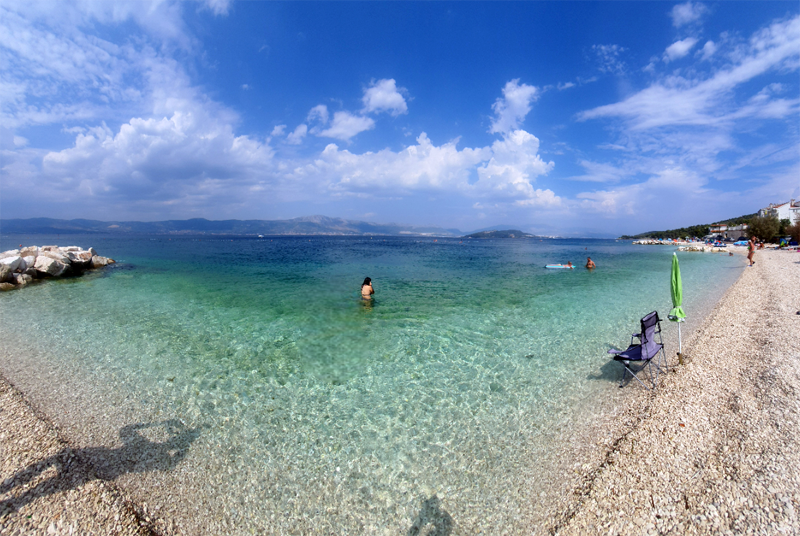
Čiovo Island - Slatine beach
(in 31 Km) Split: Split is a city with a fascinating history that dates back to the Roman era. It was founded in the 4th century AD when the Roman Emperor Diocletian chose this coastal location to build his grand palace, which would later become the heart of the city. Over the centuries, Split evolved from a Roman fortress into a thriving medieval town and, eventually, a modern urban center. Influences from the Byzantines, Venetians, Austrians, and even the French have shaped its architecture and culture. Today, Split is the second-largest city in Croatia and a UNESCO World Heritage Site, where ancient history coexists with vibrant modern life. Walking through its streets, we can still see traces of its rich past blending seamlessly with the energy of a bustling Mediterranean destination.
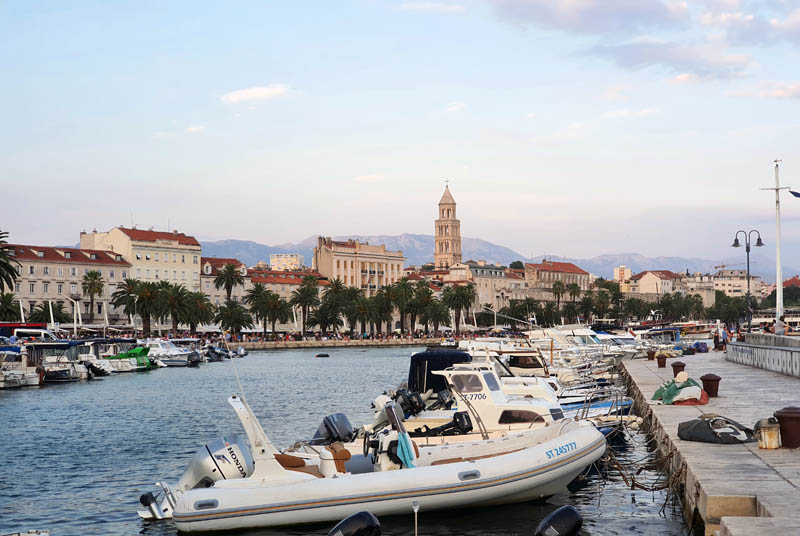
Split - Riva (waterfront promenade)
We started our visit along the Riva, Split’s famous waterfront promenade. This lively boulevard, lined with palm trees, cafes, and restaurants, stretches along the Adriatic, offering stunning views of the sea and nearby islands. It’s the perfect place to soak in the city’s atmosphere, watching boats come and go while enjoying a coffee or an ice cream. Before entering the heart of Diocletian’s Palace, we passed through the Aenea Gate, also known as the Brass Gate. This southern entrance, once used as a direct passage between the palace and the sea, allowed the emperor and his household to access the harbor discreetly. Today, it serves as an entry point from the Riva into the underground basements of the palace, giving visitors a dramatic introduction to the city's ancient foundations. The Republic Square, or Prokurative, was our next stop. This impressive open square, surrounded by Venetian-style buildings, reminded us of St. Mark’s Square in Venice. With its vibrant red facades and elegant archways, the square often hosts concerts and cultural events, adding to its charm and energy.
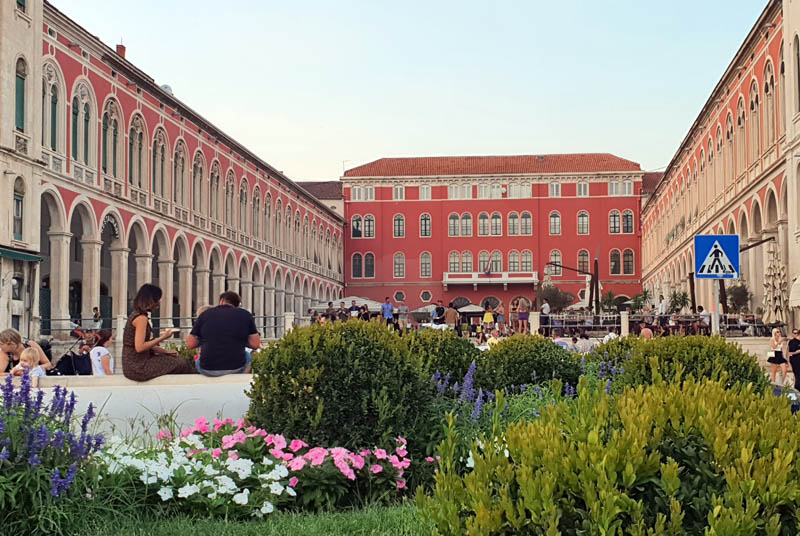
Split - Trg Republike (Republic Square)
From there, we wandered into People’s Square, known as Narodni Trg, one of the most historic and picturesque parts of Split. This square has been the heart of the city since the Middle Ages, surrounded by beautiful Renaissance and Gothic buildings. Here, we admired the 24-hour clock tower, a fascinating detail that still preserves a piece of the original Roman construction. Walking through the Iron Gate (Porta Ferrea), one of the four main entrances to Diocletian’s Palace, we entered the heart of ancient Split. The gate, once part of the fortified Roman palace, still stands strong, marking the transition between the medieval town and the emperor’s former residence. Inside the palace, we followed its two main streets, Decumanus and Cardo, which were typical of Roman urban planning. The Decumanus, running east to west, connected the Silver Gate and the Iron Gate, while the Cardo, running north to south, linked the Golden Gate with the Brass Gate. These streets still retain their original paving stones, and walking through them felt like stepping back in time.
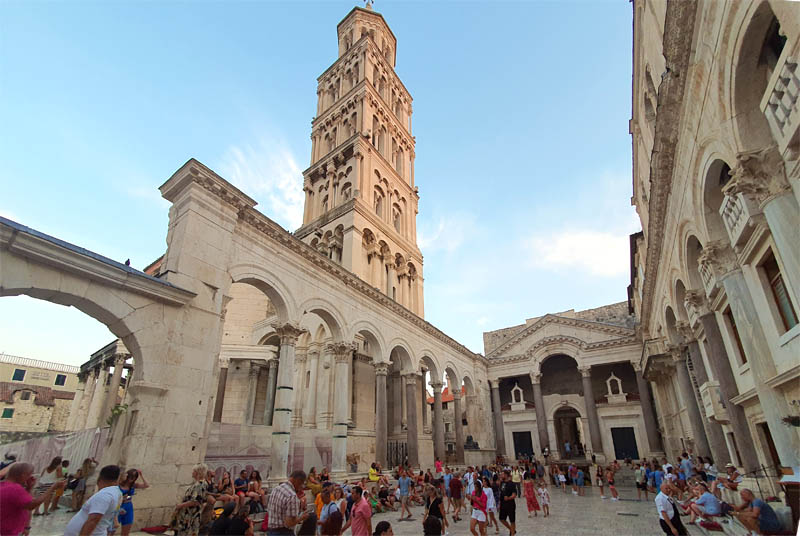
Split - Diocletian’s Palace - Peristyle and Saint Domnius Cathedral
At the heart of the palace, we arrived at the Peristyle, an impressive courtyard that once served as the ceremonial center of Diocletian’s Palace. Despite its name, this was never a palace in the traditional sense, but rather a massive, fortified military camp that housed Diocletian’s retirement residence, temples, and barracks for soldiers. Built as a reflection of Roman power and divine rule, it was one of the most elaborate structures of its time. The Peristyle, with its towering Corinthian columns, was designed as a place where Diocletian could be worshiped as a living god. Among its most fascinating details are the Egyptian sphinxes that still stand here, brought from the temples of the Nile more than 3,000 years ago. These remnants of Egypt, alongside the grand Roman architecture, give the Peristyle a truly unique character. Facing the Temple of Jupiter, we also stopped to admire the statue of St. John the Baptist, a later addition that symbolized the transition from paganism to Christianity. The combination of Egyptian, Roman, and early Christian elements made this one of the most intriguing parts of our visit.
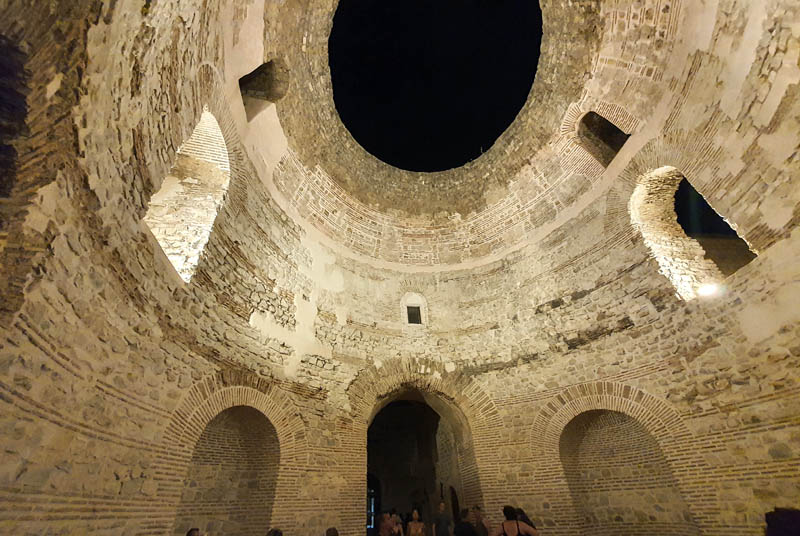
Split - Diocletian’s Palace - Atrium
Continuing our journey, we passed through Let Me Pass Street (Pusti me proć), famously known as the narrowest street in Split, before reaching the magnificent Cathedral of St. Domnius. Originally built as Diocletian’s mausoleum, this cathedral is one of the oldest in the world. Its bell tower, offering panoramic views of the city, is a must-climb for adventurous visitors. We then descended into the Basements of Diocletian’s Palace, a vast underground complex that once served as storage rooms for the emperor’s residence. Today, these chambers host exhibitions and markets, showcasing the city’s vibrant artistic scene. These dark, cavernous halls also gained worldwide fame as a filming location for Game of Thrones. Fans of the series will instantly recognize these underground chambers as the place where Daenerys Targaryen kept her dragons imprisoned in Meereen. The eerie atmosphere and ancient stone walls made it the perfect backdrop for the show’s dramatic scenes. Finally, we ended our tour at Fruit Square, or Voćni Trg, a charming plaza named after the fruit market that once thrived here. Surrounded by historic buildings, including the Venetian Milesi Palace, the square was the perfect place to relax and reflect on our journey through Split’s remarkable past and present.