Travel to Croatia
Day 2 Rocca Grimalda - Venice - Quarto d'Altino (391 km.)
(in 364 Km) Venice: Venice, often called "La Serenissima," is a city with a history as unique as its geography. Built on more than 100 small islands in a lagoon of the Adriatic Sea, it was founded in the 5th century by refugees fleeing barbarian invasions. Over the centuries, it grew into a powerful maritime republic, controlling trade routes between Europe and the East. By the 13th century, Venice was a center of commerce, art, and culture, with immense wealth reflected in its palaces and churches. Though its political power waned after the 17th century, the city has remained a symbol of beauty and ingenuity, drawing millions of visitors each year to its canals, bridges, and historic sites.
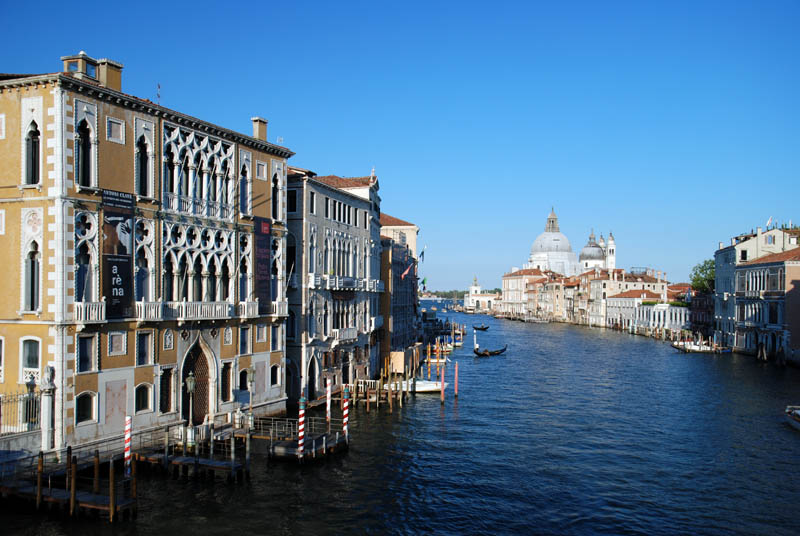
Venice - Grand Canal
Our visit begins with a ride on vaporetto No. 1, heading toward Zaccaria. This waterbus journey along the Grand Canal, Venice’s main artery, is the perfect way to take in the city’s atmosphere. As we glide past elegant palaces and bustling gondolas, the life of Venice unfolds before us. The Ca’ d’Oro, with its intricate Gothic facade, and the Peggy Guggenheim Collection, a hub of modern art, are just a few of the architectural and cultural treasures visible from the water. The vaporetto offers a front-row seat to the beauty of this floating city, and the gentle lapping of the water adds to the experience.
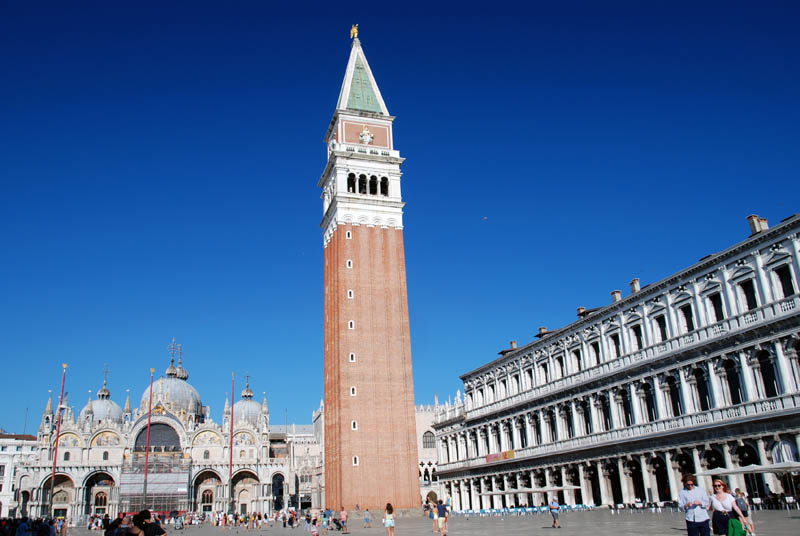
Venice - Piazza San Marco
We disembark near Piazza San Marco, Venice’s most famous square and a true centerpiece of the city. Surrounded by the majestic St. Mark’s Basilica, the soaring Campanile, and the elegant arches of the Procuratie, this square has been a gathering place for Venetians and visitors for centuries. Climbing the Campanile, Venice’s iconic bell tower, rewards us with breathtaking views of the city and the lagoon. Inside St. Mark’s Basilica, the golden mosaics, intricate marble floors, and Byzantine details are a testament to Venice’s connection to both East and West. Every corner of the basilica tells a story of the city’s wealth, spirituality, and artistic legacy.

Venice - St. Mark’s Basilica
Next, we explore the nearby Doge’s Palace (Palazzo Ducale), a masterpiece of Venetian Gothic architecture. Once the residence of the Doge and the center of government, the palace is a symbol of the city’s former political power. Its grand chambers are adorned with stunning works by Titian, Tintoretto, and Veronese, depicting scenes of Venice’s history and mythology. The Bridge of Sighs, which connects the palace to the old prisons, offers a poignant moment. Legend has it that prisoners crossing the bridge would sigh at their final view of Venice before their imprisonment. This blend of beauty and history makes the Doge’s Palace a highlight of the tour.
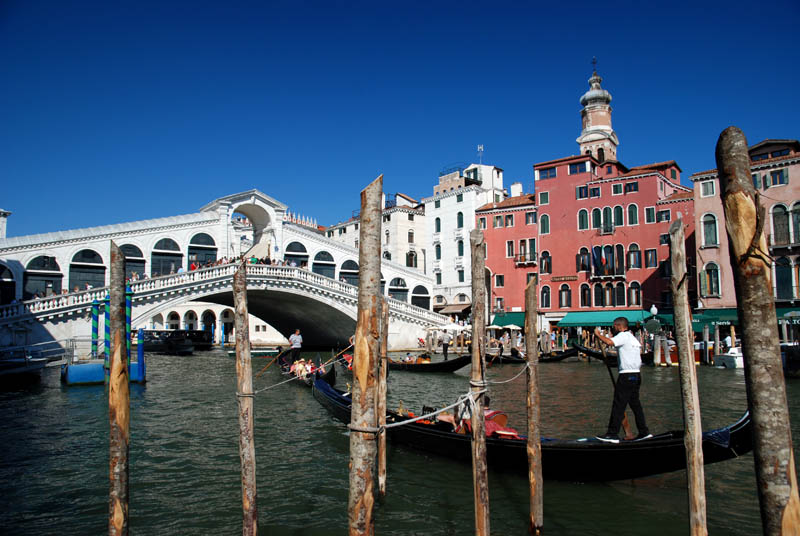
Venice - Rialto Bridge
Our journey continues on foot as we cross the Rialto Bridge, one of the most iconic landmarks of Venice. Built in the late 16th century, this stone bridge spans the Grand Canal and has been a vital connection for centuries. The bridge itself is lined with small shops selling jewelry, souvenirs, and crafts, creating a lively atmosphere. Just beyond the bridge is the Rialto Market, a vibrant space filled with the colors and scents of fresh seafood, fruits, and vegetables. The market is a living tradition where Venetians shop daily, and it provides a glimpse into the city’s culinary culture and local life.

Venice - Rialto Bridge
Walking deeper into the city, we pass through Venice’s charming campo, or squares, each offering a unique slice of Venetian life. These open spaces are surrounded by cafes, shops, and smaller churches, where locals gather and visitors find moments of peace away from the busier areas. Our final stop is the Basilica di Santa Maria Gloriosa dei Frari, a remarkable Gothic church that houses some of Venice’s most treasured artworks. Inside, we find Titian’s masterpiece, Assumption of the Virgin, as well as other significant works that highlight the city’s deep artistic roots. The church’s serene and grand interior is a fitting end to our exploration.
We spent only five hours visiting Venice. We had visited it before, but as we were passing by it on our way to Croatia, we took the opportunity to show it to our daughters.
(in 27 Km) Quarto d'Altino: We rested in this village, at the outskirts of the Venice.